Last Updated on 22/08/2026 by Raj
Triumph Tracker 400
Triumph starts its 400cc run with the Speed 400. It debuted with the 398cc engine and a stunning design which is likely based on KTM. This platform supports multiple models range, including the Scrambler 400 and the Thruxton 400. Now Triumph unveiled another model based on the Speed 400 – the Tracker 400. Here’s in depth technical review of the new Tracker 400.
Triumph Tracker 400 – Intro
Triumph has been planning a flat track bike for over a decade for its classic lineup. The company first try with the ‘Street Tracker’ way back in 2013 with name trademark, and the same title was re-trademarked in 2024 in for the new Tracker 400.
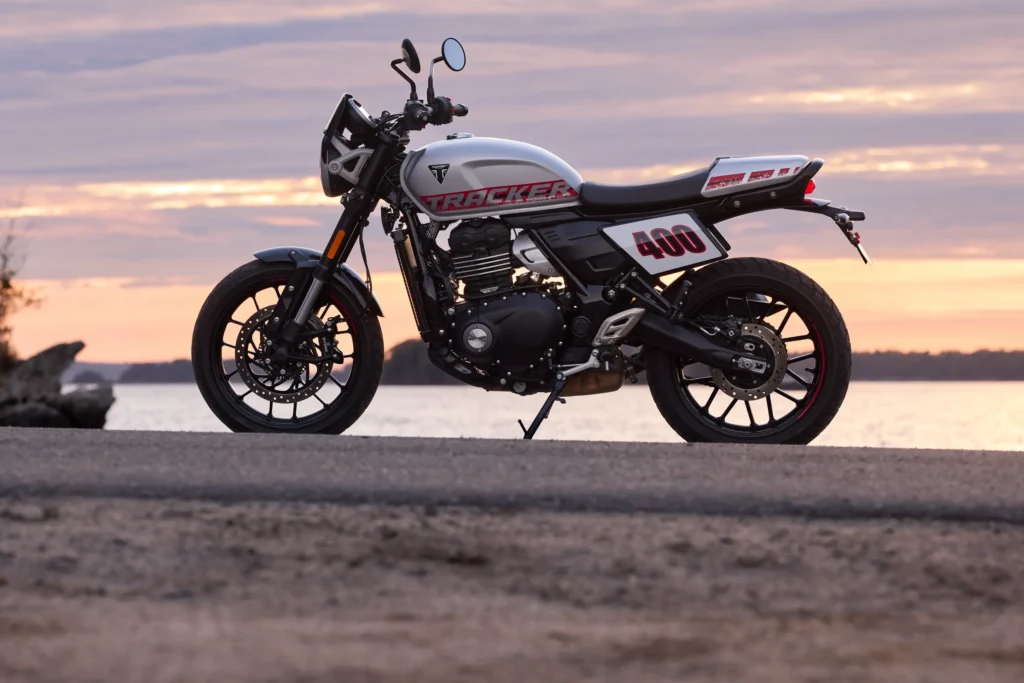
The original plan listed it as the Street Triumph Tracker 400 but the decision to drop Street from the name appears to be a logical move. It helps distinguish the bike from the Street Triple and Street 400 without confusion. The Tracker 400 is a flat-track styled motorcycle that is different from the Speed 400 Scrambler 400 X and Thruxton 400 in design but based on the same entry and level “TR” family.
It takes the same 398cc liquid‑cooled single but, with some design and component changes. Fits into a chassis and bodywork that closely resembles American flat track racers, with minimalist body work, more wide bars and a shorter tail section.
Updated TR‑Series engine remap to deliver around 41 PS and 37.5 Nm through a six‑speed gearbox with assist and slipper clutch. The aim is to give accessible performance and attract newer riders while still packing enough punch for experienced riders.
Design: Triumph Tracker 400
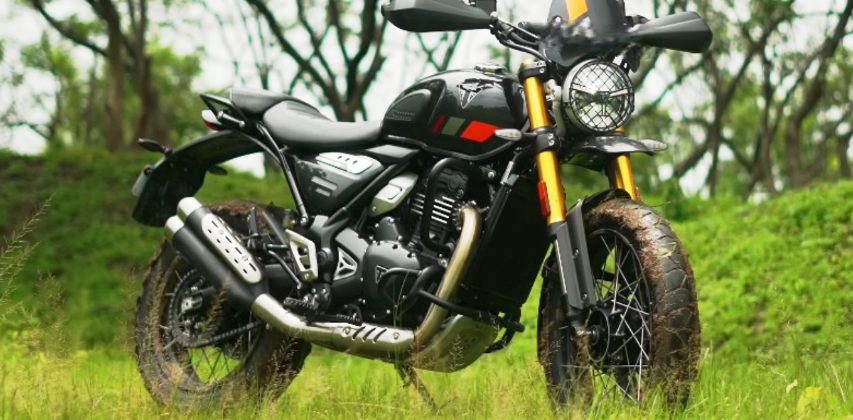
The new Triumph Tracker 400 is inspired from the iconic American flat track racing bikes. Reinventing the raw, stripped-back looks and competitive spirit and the style and attitude of an oval dirt track racing machine. Designed to turn heads, the Tracker 400 blends race-inspired styling with aggressive lines for an flat track look.
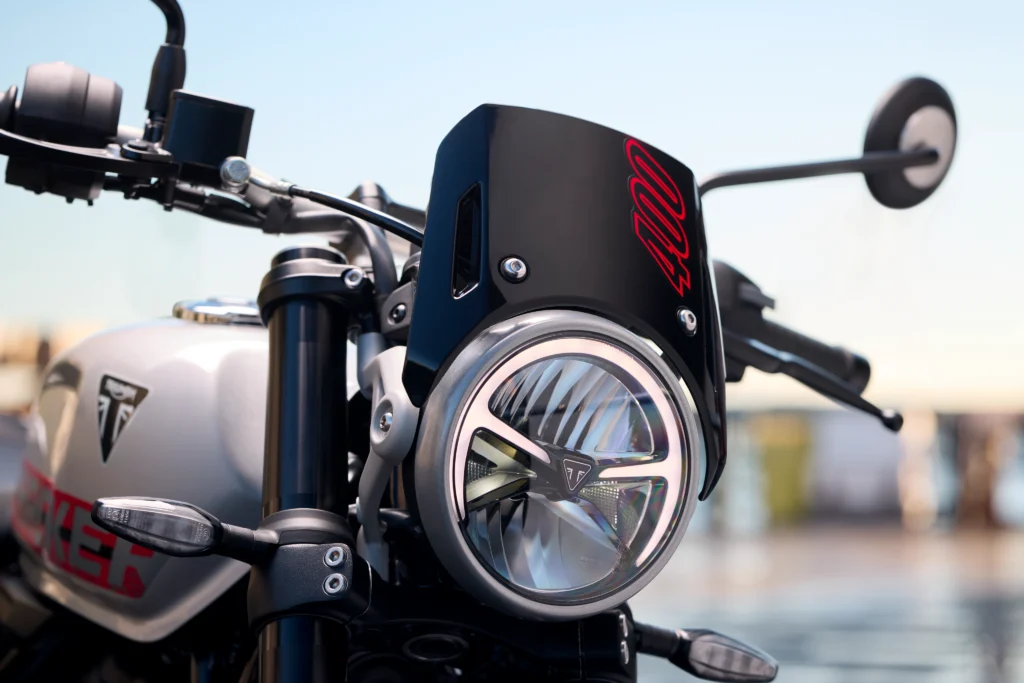
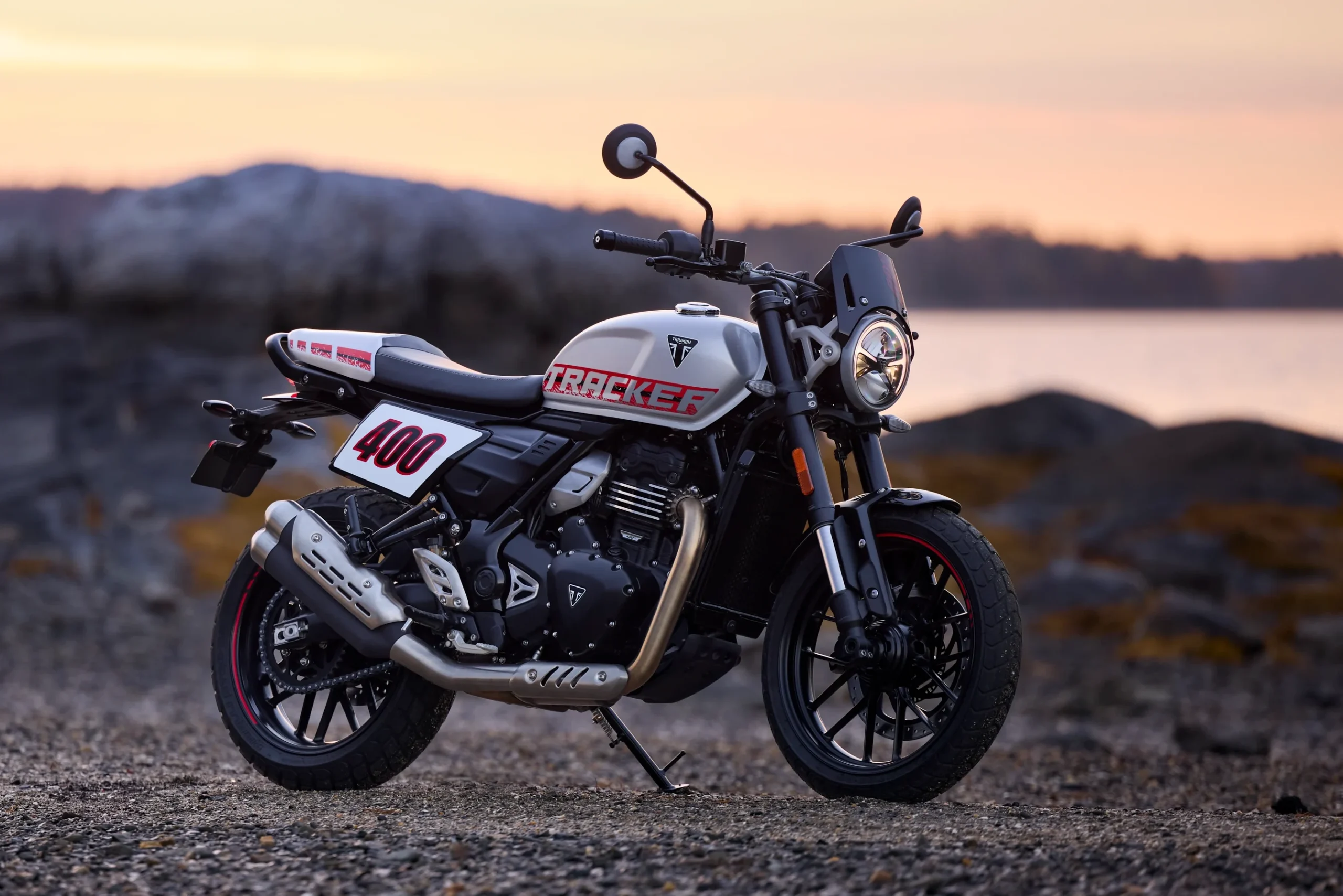
Triumph’s classic design language, with the iconic engine profile makes it a retro classic. The tracker-style long and sleek fuel tank, with its sculpted cut-outs. Blends seamlessly with the new small fly screen and seat cowl. The dual-spoke wheels design with blocky dual-purpose tyres deliver a sporty and aggressive stance.
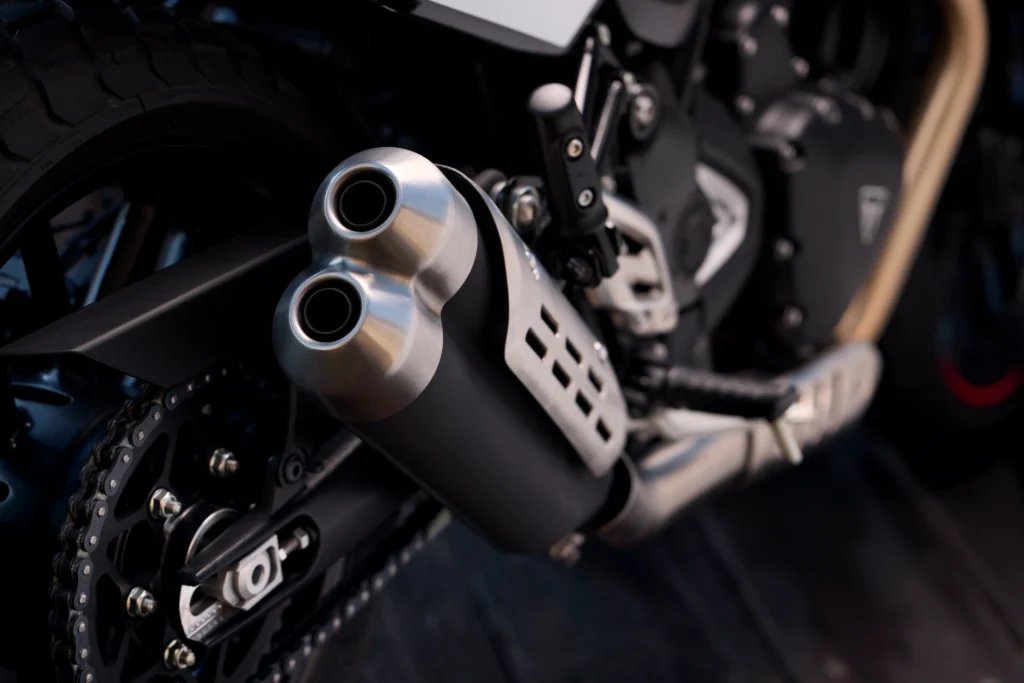
It features the classic signature engine design with powder-coated covers and machined finish cylinder head fins. That Triumph’s design DNA, exceptional finish, and attention to detail are noticeable throughout the bike. With a classic round LED headlight and flowing dual-tipped silencers at the rear.
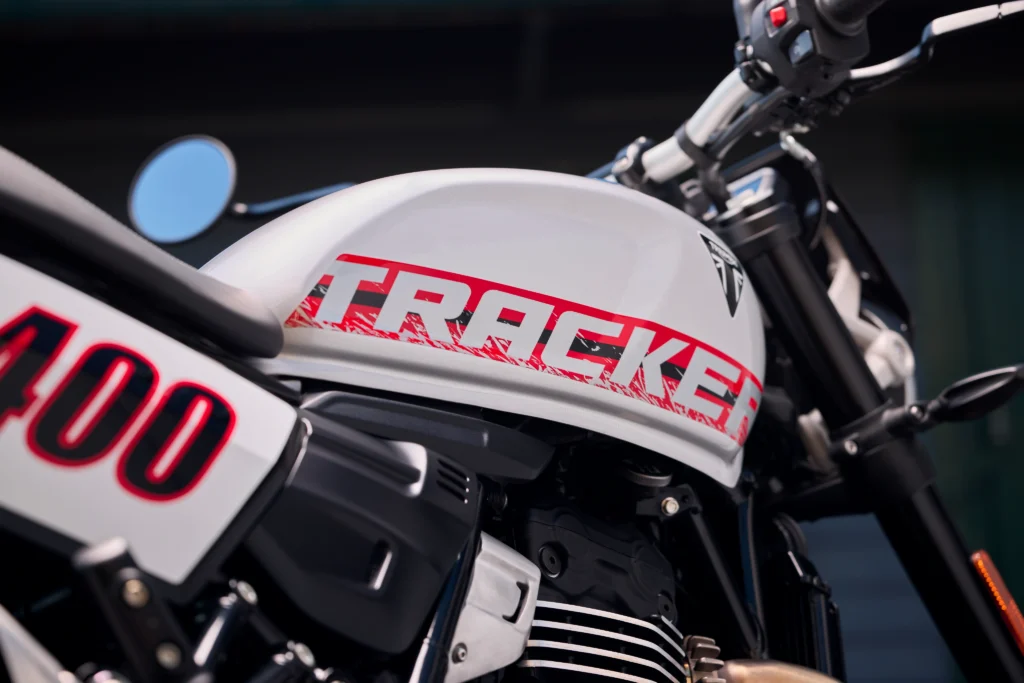
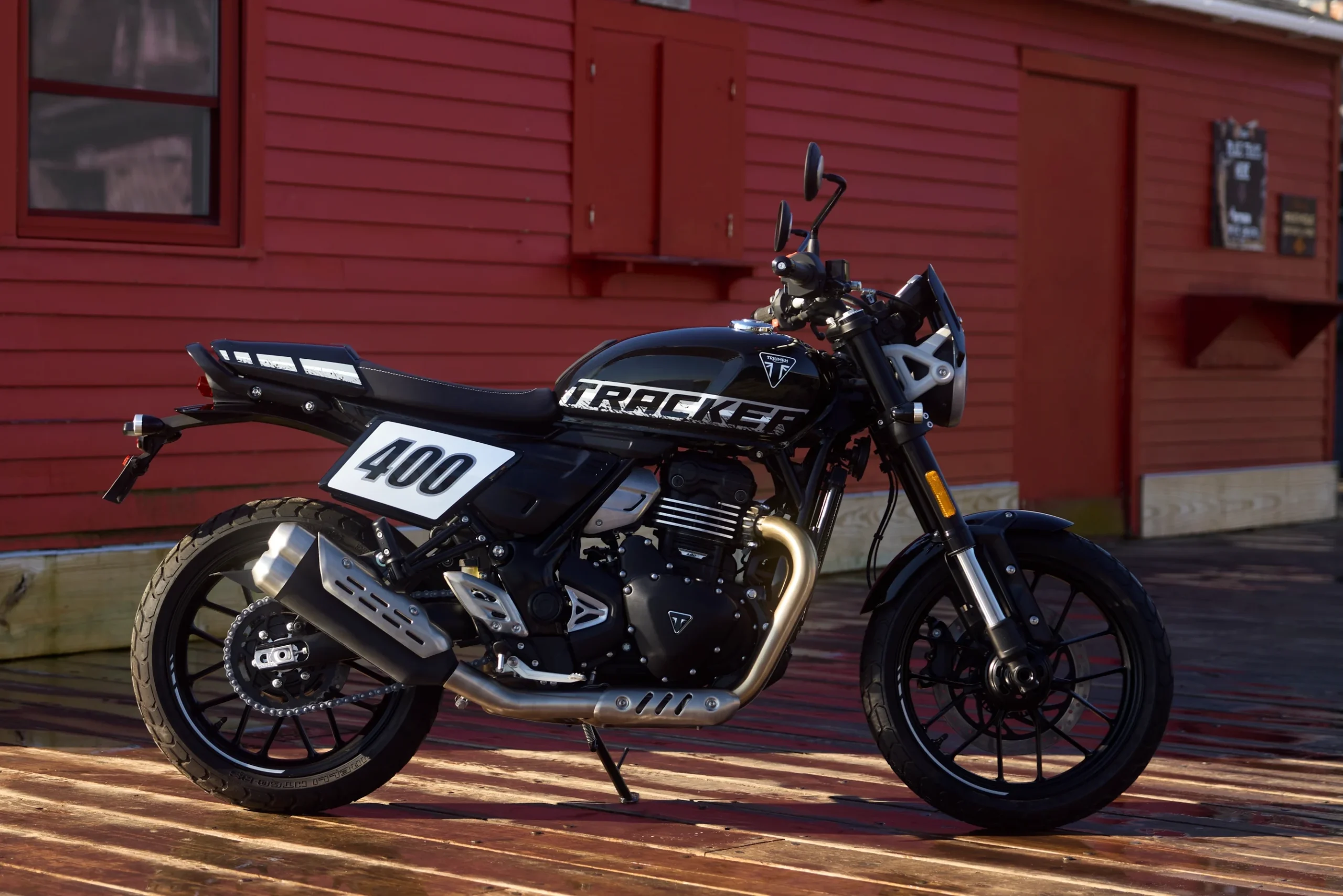
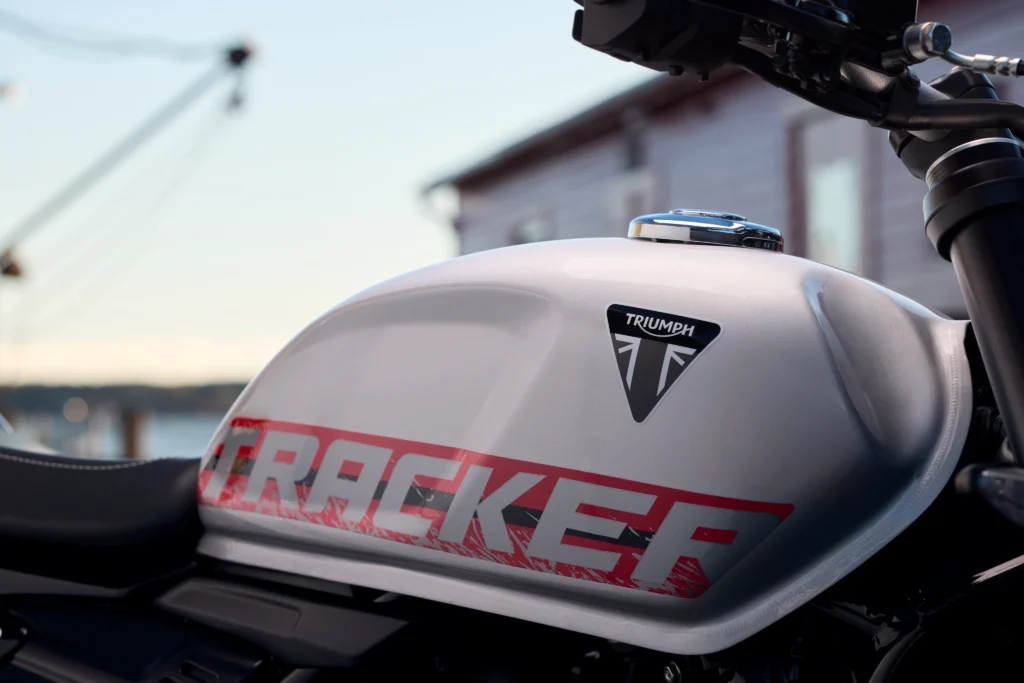
Tracker 400 offered in three race-inspired colour schemes, with a bold Tracker logo on the fuel tank. Set with sleek racing stripes with stylish mud-splatter detailing that blends seamlessly onto the seat cowl.
The Aluminium Silver Gloss with racing red graphics across the fuel tank, seat cowl, number board, and wheels. Racing Yellow gives a vibrant statement with bold yellow tank and seat cowl. Covered by Phantom Black elements and Racing Yellow highlights on the number board and wheels.
Engine and Electronics:
The Triumph Tracker 400 is powered by the new more powerful version of the 398cc TR Series Single that it shares with the Thruxton. The TR series engine first debuted in the Speed 400 and Scrambler 400 X. But for the Tracker 400 there is slight power increase by set the rev limit bit higher, which we saw with the Thruxtion.
With some minor changes Triumph managed to 5% increase the peak power. The engine now makes a claimed 41.4 hp at 9000 rpm over 39.5 hp on the Speed 400 at 8,000rpm making it distinctly different nature in higher speeds and RPM. To get this engineers redesign the camshaft profile with new engine tune.
So the intake can open for longer duration and with more lift than the older version. Allowing the Tracker to rev more hard and higher boosting the throttle response. Also, there is new engine electronics mapping with new ride-by-wire throttle and ECU. The maximum torque remains the same 27.7 lb-ft., but the peak arrives earlier at 7,500 rpm. Though the peak torque arrives bit later, but 80% of it accessible from 3,000 rpm with a solid low end torque.
Triumph Tracker 400 engine is paired with a six-speed gearbox through a torque assist slipper clutch to reduces wheel spin under aggressive downshifts. And there’s switchable traction control but it’s not lean-sensitive one and dual‑channel ABS to keep everything in line. An analogue speed, with warning lights and a small, digital LCD display for revs, gear position, fuel. Odometer is used to give a clean timeless look, and a USB-C port same as other models.
Chasias and Ergonomics:
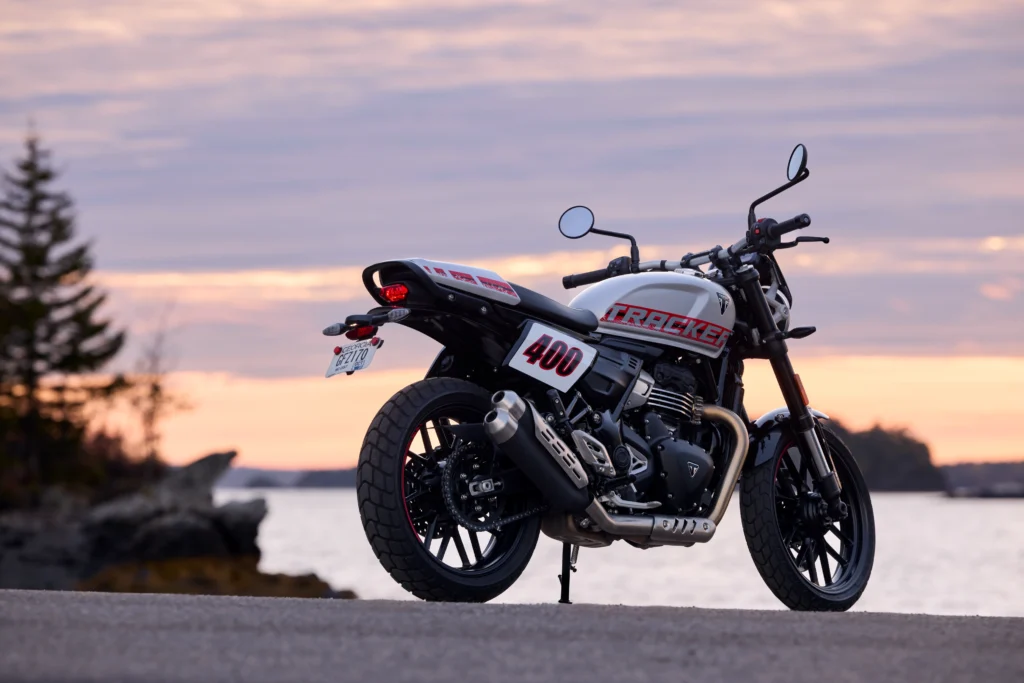
While the main frame is the steel tube frame called a hybrid spine/perimeter frame. It is similar to the Triumph’s other 400cc bikes. But for the Tracker it got distinct geometry and riding position to bit different from other models. This dedicated chassis tune gives it more sharper handling and more playful nature.
The front forks are non-adjustable 43mm upside-down unit and at the rear a preload-adjustable gas monoshock setup is similer to the other 400 lineup. The front forks have 140mm of travel and 130mm for rear wheel movement, same as the Speed 400, but at 1371mm its wheelbase is 6mm shorter than Speed 400, and the rake angle is 0.2° steeper at 24.4° and 5.6mm more trail.
With a 15mm taller seat, higher and more rearset mounted foot pegs. Lower and wider bars gives Tracker 400 more different riding feel than those chassis designs suggest. This setup give a balance between comfort and the firmness for make it equally useable in urban riding and light off-road tracks.
The wheels are some different from the Speed or the Scrambler. Front and Rear new alloy wheels are 17 inches like other 400. It use 14-spoke instead of 10-spokes design, and get new Pirelli MT60 RS semi-off-road tires for the flat track look. The front wheel gets a 300mm disc with single four-piston radial-mount with ByBre caliper. The rear uses a single-piston floating caliper and 230 mm disc same as the Speed 400. But the Tracker is 3 kg heavier than the Speed 400 but 3 kg lighter than the Thruxton 400, at 173kg.
Dual‑channel ABS with this new setup gives maximum stopping performance smoothly and deliver confidence and predictable grip with stopping power in any road conditions. The new riding position is very different from other lineup, to give Tracker more comfortable riding for longer duration of time.
Upright and elbow out design for signature Flat Track style, with wider handlebars, which is 23mm broader and 134mm lower than Speed 400 to enhance its agility and for more forward riding posture. 805mm seat height, 15mm taller than before, the foot pegs, are a repositioned 86mm further back and 27mm higher to push the rider weight over the front.
These ergonomics changes are to give Triumph Tracker 400 more commanding presence. The new fuel tank design is borrowed from Thruxton, with angularly-and bit slimmer than the Speed 400 to give a modern retro look instead of classic, with more prominent knee cut-outs and with 13 liters of fuel capacity.
Capability : Triumph Tracker 400
Triumph always gives exceptional performance and top notch quality machines throughout the years never compromises. The Triumph Tracker 400 or other 400 models are no exception. It is built with premium components with high precision parts. Every element is designed to give superior performance and an excellent riding experience.
Powerful radial caliper brakes give strong and progressive braking in any road or driving condition. Strong cast aluminum wheels, and a rear swingarm is redesigned for more strength and agility for the Tracker’s design. The big piston upside-down forks give high-performance damping give a controlled ride.
Even the engine finished in the highest standards, like high precision-machined cooling fins and light-weight build. Triumph’s attention to detail ensures a clean and uncluttered look. Also Triumph offers a wide range of genuine accessories for styling and protection.
Every accessory is designed and engineered with same standards as the motorcycle parts to give a perfect fit, seamless blend, and max reliability. Like parts for engine, bars and tank pads for crash and paint protection. As also styling enhancements like bullet LED indicators, bar-end mirrors, and premium quilted seats.
Rivals:
In recent years many riders are switch to the 400cc, due to their cost, easy riding and maintenance over high capacity bikes without taking the fun. In countries like the UK or USA customers faced with speed limits. Licence regulation or increasing traffic, not to mention smaller budgets, also push increasing switch of bigger and faster bikes for smaller ones. Countries like India and Asia are riders switch from smaller machines to the 400cc class. So there’s a tough level of competition and many choice of alternatives.
Husqvarna & KTM: Both Duke 390and Husky 401 share the same platform and use almost same hardware with just few changes. Svartpilen 401 has a more flat track looking than the Tracker 400, and KTM is more puncy, and both are bit more powerful, and lighter, with more electronics packed. But the Triumph, Husqvarna, and KTM are made in same place with partnership with Bajaj in India.
Royal Enfild Guerrilla450: Is a cheaper alternative and the Guerrilla 450 is also Indian brand and comes with a similar flat-track style. Despite a larger 451cc engine it’s bit less on power but more on torque, and the suspension is not USD forks.
Triumph Tracker 400 Lineup: Yes Tracker 400’s biggest rivals are in its own brand, with other 400 offering a similar set of hardware in less amount of money.
Pricing:
Triumph is set to launch it globally, however India is the first country see it first like Thruxton 400. With new more powerful version of the TR-series engine, and design changes justify its price.
The Triumph Tracker 400 arrives in showrooms in April 2026 as an early 2027 model. For the U.S and north market it can start with of $5,995, and at £5745 in U.K and Europe regardless of the three colour schemes, and ₹2.25 Lakh to ₹2.70 Lakh ex-showroom for India.
The Tracker 400 bit cheaper than the Scrambler 400 XC, and the Thruxton 400 but they are diffrent machines with different styles and purposes. Which mean it’s less likely to be competing for the same segment.
Pros and Cons:
Pros:
More power than the Speed 400 or Scrambler 400 with uprated 398cc single engine.
The engine is super refined and revs higher then previus model.
New bodywork and fuel tank design with updated riding geometry.
Simple and clean design not over engineered for a timeless look
Triumph’s superior quality is one of the best in the segment with excellent fit and finish.
Cons:
Too many 400cc lineup of Triumph making it hard to choose in between.
Some rivels are more powerful and have more electronics and tech.
Bit expensive compared to some rivals and own family.
Miss on some modern features.
Verdict:
Triumph Tracker 400 has already make success with the Speed 400 and Scrambler 400. So there’s no doubt about the Tracker 400 will be any less. The real challenge for this brand is to attract the customers from other brands rather than confusing them with its own lineup.
It’s a good looking machine with a retro charm, bit more performance than the Speed 400 thanks to higher revv range, and with handling and comfortable riding position. It’s very promising on paper and real world.