Last Updated on 15/10/2026 by Raj
Kia Syros EV Review
So what makes 2026 Kia Syros EV so special? It has a 526 km claimed range with 171 PS of power or the practical cabin with long list of features. So let’s find out in this review.
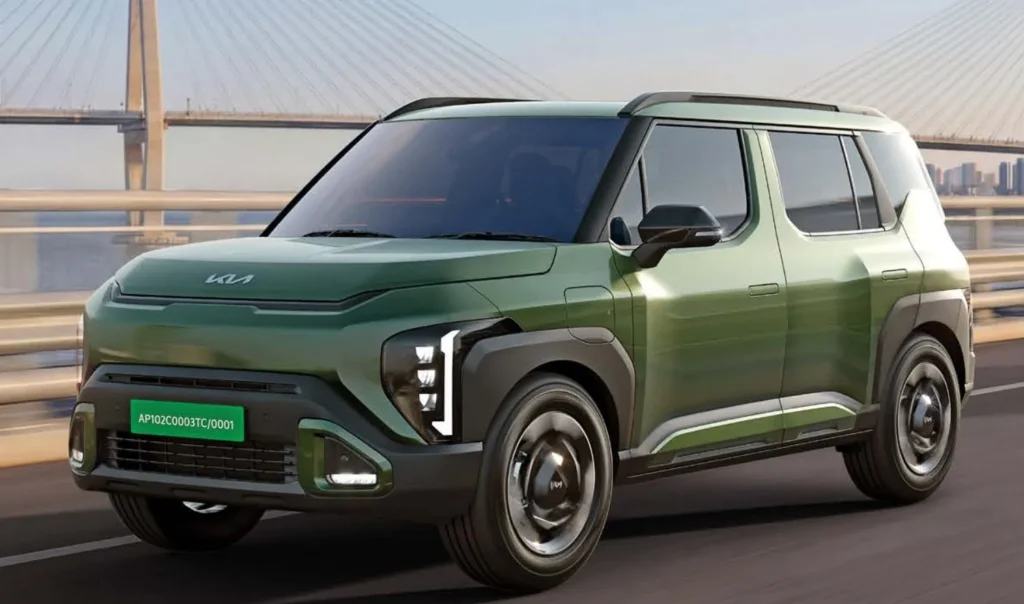
Kia Syros EV – History
There was a time when buying an EV was a bit of compromise. You had to choose between range and everyday usability or performance and technology. But now the EV market has changed rapidly and Kia is looking to make electric mobility a natural upgrade rather than a forced compromise.
Kia entered the Indian market with a strong reputation for bold and different styling, premium interiors, and feature rich vehicles. Models like Seltos and Sonet changed the market forever and helped establish the brand as one of the important players in the Indian car market. Kia is no stranger to EVs, they brought its first offering in 2022 as an import unit, the EV6.
It was a very stylish, fully-loaded, and complete package in itself. But the premium price tag and the competition against entry-luxury segment offerings, plus the small EV market in India, led to it becoming a niche product. After that in 2024, the EV9 luxury EV SUV was the latest offering from Kia.
But it faced even more challenges, because it’s a very expensive CBU SUV and Kia pitted it against established luxury brand price tag in the INR 1 Cr+, and the EV9 badly struggled to get any market and sales. So Kia changed the plane for India’s quickly growing mass-market EV segments, and they understand that they have to offer something that would be perfect in both product and pricing.
Introduction
Kia comes up with the Carens Clavis EV in 2025. Based on popular Carens Clavis MPV and it was a success. Not chart busting but better than the previous models and managed to gain some decent sales. Kia now choose the Syros to be its second mass-market EV. When the Syros first arrived, its tall-boy stance, big headroom, boxy proportions and upright stance made it a complete package.
However, the oddball MPV looks and high price tag held back the original ICE version against traditional SUV rivals. But the EV market is bit diffrent, and customers are generally more accepting of nontraditional design and higher price tags. The Kia Syros EV was not an afterthought but a clever move by Kia, and the EV conversion makes sense now.
The tall body stance leaves plenty of room for passengers above the battery. The short bonnet suits a front motor without compromising visibility. The blocky shape now became much aerodynamically clean. The Syros EV uses the same electric motor paired with 42kWh & 51.4 kWh liquid-cooled Li-ion battery pack which is similar to Carens Clavis EV and makes the same power & torque figure.
But the claimed MIDC range is now increased up to 526 kms on long range 51.4 kWh battery & 443 km on a standard 42 kWh battery pack respectively. Similar to its ICE counterpart, the Kia Syros EV also has a long list of modern features. It gets a 30-inch wide Trinity Panoramic Display screen with an integrated driver information cluster. A central infotainment screen and a 5-inch touchscreen panel for air-con control in the middle.
Shift-by-wire steering system with column mounted shifter paddle to control regeneration levels and iPEDAL single-pedal driving function. 8-speaker Harman Kardon Premium sound system, 64-color LED ambient lighting and footwell lamps. Both row ventilated seats with sliding and reclining 2nd row seats, a 360° camera system, a smart camera with dual dashcams etc.
The EV market in India is growing very fast, in 2025-2026 financial year.Alone EV sales cross nearly 2 lakhs units, registering 100% year of growth. These numbers indicate that Kia is working on its EV lineup to grab a larger share of a rapidly growing market.
Design: Kia Syros EV
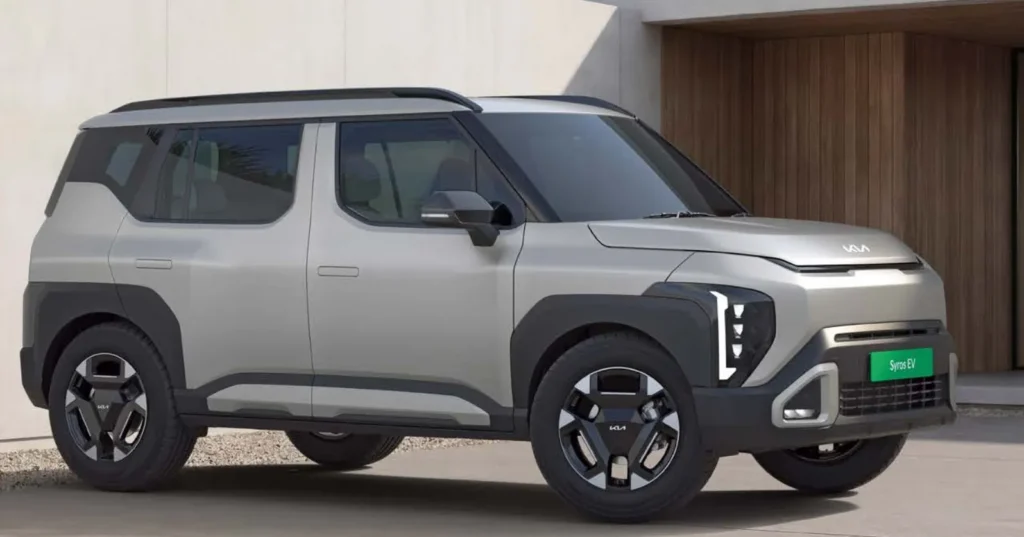
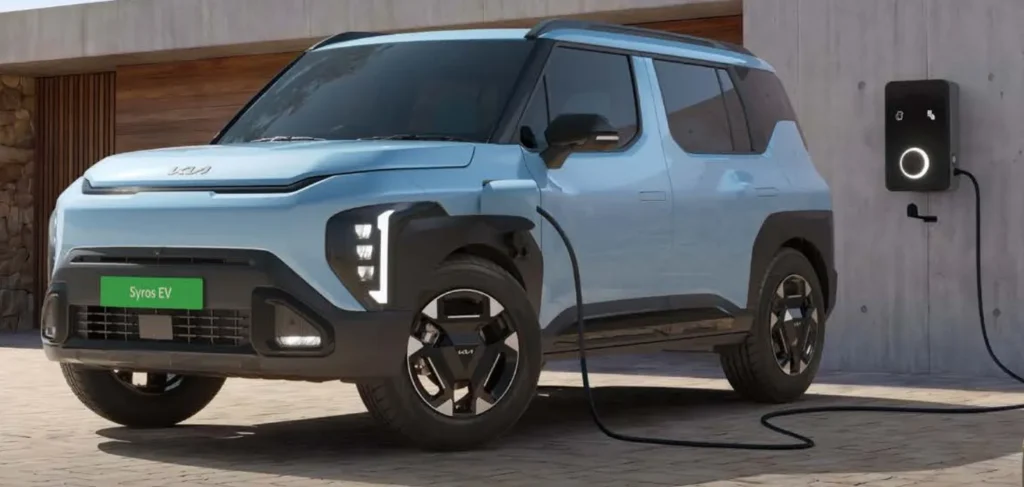
The Kia Syros EV follows the Kia’s ‘Opposites United’ design theory. So the base design directly carried forward from the ICE version. At the front, it has the same familiar Digital Tiger Face design of Kia global with the vertically stacked cube shaped MFR LED headlamp cluster followed by an LED DRL with integrated amber indicators on the outside. LED fog lamps sit on the lower bumper.
The lower bumper and skid plate design are slightly revised and are finished in gloss black. The slimmer goes with the single slat upper grille, along with some underbody for more airflow improvements. It helped the car to get the coefficient of drag down a bit 0.34 from the ICE’s 0.35. Bonnet gets the similar character line with crease bump in the middle for a muscular look.
The bonnet lip edge is wrapped in glossy black plastic instead of the full-length DRL. The rear follows the same design over with minimal changes. It gets the same Starmap LED tail lights, with the new LED turn signals. The high-mount stop lamp inside the rear glass is also a continuous LED strip. Lower bumper and skid plate have some design changes now finished in gloss black trim.
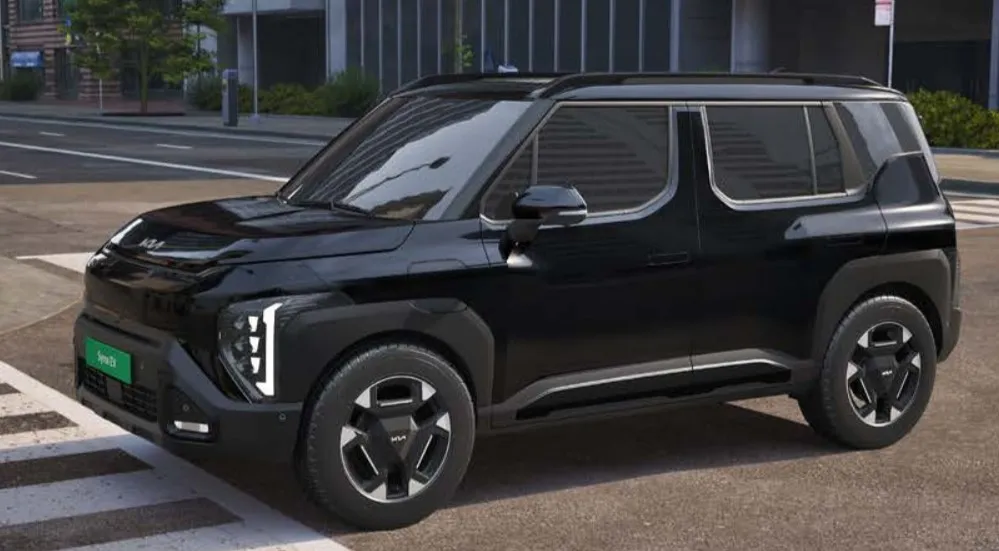
The side profile is also largely unchanged by design and looks very similar to the ICE. The 17-inch Crystal Cut Dual Tone Alloys borrowed from the ICE, wrapped with 215/55 section tyres. Now standard for all extended-range battery pack models. But the standard Range models get the 16 wheel in a different design.
The vertical design language is all over the car. Even the door & panel creases are vertical for detail symmetry and cleanliness. The front quarter glass panel is wide and rounded and door-mounted ORVM helps eliminate the blind spots. Also the parking sensors on both ends and even on the side help with parking in tight urban spaces.
The car measures 3,995 mm in length, 1,805 mm in width, and 1,670 mm in height. It has a wheelbase of 2,550 mm, and Kia claims ground clearance is now 197mm, which is 7mm more than the ICE car. There are major changes and it’s that the streamlined door handles with auto-pop on unlock, do not require manual press on their front edge.
So if anyone not like the way the Syros looked. The EV isn’t going change much. Its rounded fascia looks appropriate for the EV and look better than the ICE, and the vertically mounted headlights give it a different look. The chunky cladding on the bumper and on the wheel arches, doors and the rear gives some muscle.
Interior:
When you step inside the car you understand why the Syros EV looks the way it does and it makes perfect sense. There is plenty of space for passengers, their friends and the luggage. Kia has re-designed the centre console to create a lot more storage space by adding the EV’s drive selector on the steering column.
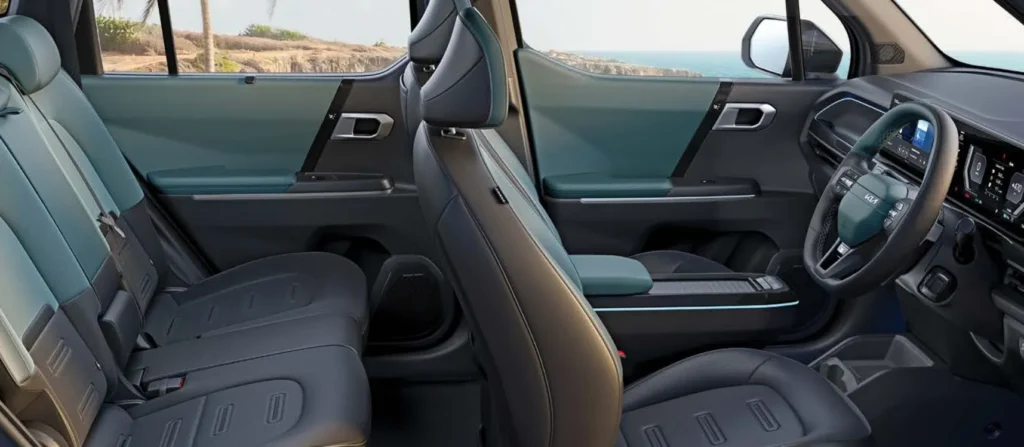
Top of the line comes with an Onyx Black with Hunter Green dual-tone interior, with some Hunter Green accents, covered with few bits of metallic and shiny gloss black trim. Even though the colour scheme on the cabin is on the darker side. But the generous glass area of the cabin makes it airy and bright, and it does not feel clumpy.
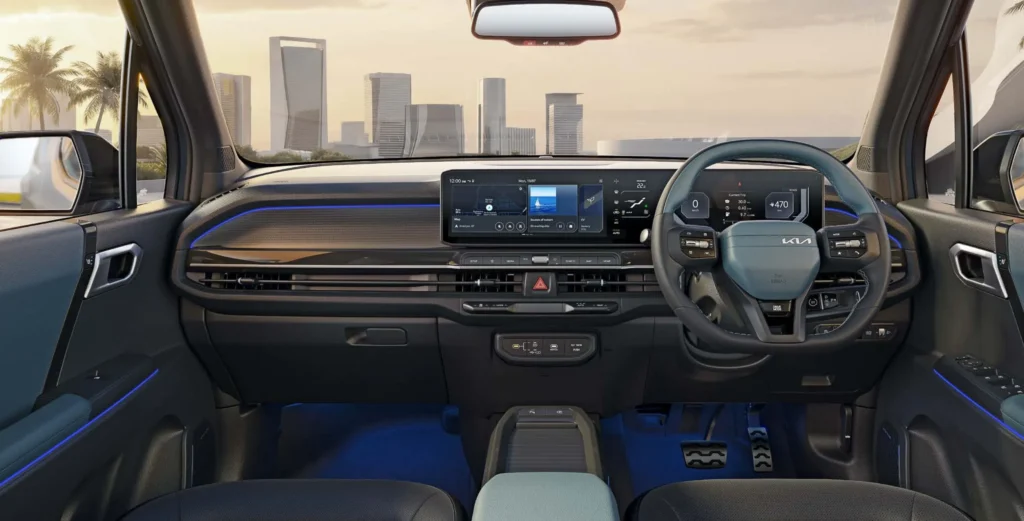
The large 30-inch Wide Trinity Panoramic Display is seamlessly connected but is split three ways: a 12.3-inch HD touchscreen display for the cockpit and Central Infotainment display, and a central 5-inch touch panel for AC controls. The steering wheel is flat bottom with newer Double D Cut 3 spoke design. Its inspired by the global EV range and it feels more natural and well-contoured in all the right places, so it feels great to hold and operate. All controls on the steering fall nicely into hand and are placed very well but there’s only a rake adjustment not reach.
The right side of the wheel houses phone, voice commands, volume, and audio controls, while the left houses ADAS, Cruise Control, and navigation cockpit controls. Paddle shifters are located behind either spoke used to control regen levels by set up or down using the left & right paddle shifters. If the regen levels are set on auto, and the vehicle uses parameters like leading traffic distance, current driving speed, and road incline to dynamically adjust regen levels.
The 12.3-inch HD Touchscreen Navigation Cockpit is provided for the drivers display, with clear info and a plethora of functions to display various operating parameters. The shifter stalk is now located behind the steering wheel, freeup some space for storage. It now features a dual-tone leatherette upholstery with the ventilated front seats. The driver’s seat has 4-way electric adjustments with backrest angle adjustments. The seats are well-contoured and very comfortable, with good support for most of the time.
Infotainment screen is big 12.3-inch HD touchscreen with plenty of modern features. Good thing is there’s also a row of physical controls for important and basic functions. Two USB-C ports and a 12V/180W port provided for the front row. The USB-C port is dual-use and also capable of 100W charging output. There is a wireless charging pad on the centre console. Dual-pane panoramic sunroof added with the enormous glasshouse makes the interior more airy and spacious.
The 2nd row seat gets a 60:40 split function and a good amount of recline. The rear seats are ventilated too, only the seat base, unlike the front row, which has back ventilation also. There is enough room to sit comfortably stretched out with plenty of head and knee room. An 16A/250V V2L plug point provided on the 2nd row for use of portable gadgets on the go. The boot space is huge with 390 litres in standard configuration and 465 litres with the 2nd row down forward. Spare wheel is provided but it’s a 125/80R16 tyre. Frunk also has a 16-liter capacity, with a 10 kg max load limit.
Features and Safety:
The big Trinity Panoramic Display conecting two 12.3-inch screens for the infotainment and driver’s display. A dedicated 5-inch screen in between for the HVAC controls. The driver’s display is logically easy to read and offers many customisation, while the infotainment screen is sharp, responsive and has a clean UI. It had a dedicated tab for showing several parameters related to the battery, range and energy consumption with real time data.
The infotainment comes with wireless Android Auto and Apple CarPlay and 8 speaker Harman Kardon audio system. Sunblinds and rear AC vents and a massive panoramic sunroof feature with glass house. On the safety front the Syros EV is very well-equipped, including Level 2 ADAS. The front gets a radar and camera-based setup, with the radar.
Level 2 ADAS comes with 16 features, including Front Collision Warning & Avoidance, Lane Departure Warning, Lane Keep & Follow Assist, Smart Cruise Control, and Blind View Monitor. A 360-degree camera, standard six airbags, all-wheel disc brakes with tyre-pressure monitoring system include.
Drive Mods and Regen:
There are 3 driving modes to choose from, each with different power output and altered throttle response and steering weight, also manage the charging cycle.
• Normal Mode: Default mode of the car mainly used for driving in the city as well as on the open road for daily use. This mode provides a good balance of power and economy and should works on most driving scenarios.
• Eco Mode: This mode gives extract maximum range with the smoothest cruise. Throttle response is minimum, resulting in a smoother drive, but it never feels strugling or lacking power.
• Sport Mode: This mode enable maximum throttle response and more heavier steering.
It comes with 3 levels of regenerative braking. Select by the paddle shifters behind the steering wheel and an additional iPEDAL mode for single pedal driving toggled by the left paddle shifter. Level 1 has relatively normal minimal braking, while levels 2, 3 and iPEDAL mode become more progressively stronger and noticeable during braking. Works like engine-braking on the higher levels, especially on long downhill sections.
The powertrain is directly borrowed from the Carens Clavis EV. The Extended Range models have the 51.4 kWh battery pack, making 169 BHP and 255 Nm. The battery pack is directly mounted on the floor with liquid cooling and it comes with an IP67 waterproof and dustproof rating.
They power a single motor on the front axle. The Kia Syros EV ER has claimed MIDC range is 526km for the 51.4kWh battery and 443km for the 42kWh unit. An 11 kW AC 3-phase wall charger is capable of fast charging the ER 51.4 kWh battery from 10% to 100% in 4 hours and the standard 42 kWh battery in 4 hours.
7.4 kW AC single-phase wall & portable chargers capable of fast charging ER battery from 10%-100% in 7 hours and 15 minutes, and standard battery in 6 hours.
Ride Comfort:
There is some suspension updates made by Kia to improve ride comfort on the Kia Syros EV. So the ride on the Syros EV is a touch better than its ICE counterpart. Spring & damper tuned for more comfort-oriented setup and it reduces some of the harsh stiffness. Also the springs have been calibrated for optimise weight distribution for the heavier EV. While the stiffness of the spring hasn’t completely gone. It’s not noticeable at low-speed ride acceptable and the car absorbs smaller bumps and thuds very easily.
The large bumps and undulations make their presence felt in the cabin. This firmness also help to control body roll, but being a tall, narrow car, there is still body roll on the corners. The four-wheel disc brakes are very strong and easily bring it to a confident halt when you release the anchors. Steering is good and responsive and it weighs up as speeds increase.
Pros And Cons:
Pros:
A well-engineered car very good build quality with nice fit & finish.
169 BHP motor is give enough fun for daily driving.
Grounded on highway speeds and good for city also.
Excellent cabin packaging retains the space and ergonomics.
Comfortable seating position and useful storage areas.
Good ground clearance of 197 mm with short front.
A panoramic sunroof, sliding & reclining rear seats, ventilated front & rear seats.
8-speaker Harman Kardon sound system, internal V2L 250V/16A 3-pin plug point.
One-pedal driving, ADAS-based Smart Safety, 526 km ARAI range.
Cons:
Unconventional and polarizing styling.
Bit expensive for higher variants.
Some features such are only on higher variants and make it complex.
The larger 17-inch alloy wheels give firm ride quality.
Real world range be lower.
Pricing:
Introductory prices for theKia Syros EV price of 13.49 lacs for the entry HTK trim and 19.99 lacs for the top line X-Line trim. Kia also offers a Battery as a Service option starting at 7.99 lacs. It is available in 7 variants: HTK, HTK+, HTX, HTK+ ER, HTX ER, HTX+ ER, X-Line ER.
Stands for Extended Range with higher capacity 51.4 kWh battery pack. It comes with a 3-year unlimited km factory warranty, even extendable up to 5 years. The battery pack comes with an unlimited lifetime warranty for 1st user only, to 8 years / 160,000 km, and 2nd user onwards.
Verdict: Kia Syros EV
From Kia Syros EV is exactly what it should be a complete package. It is the most complete family SUV under ₹20 lakh. However, it is priced in the Tata Nexon EV and Mahindra XUV 3XO EV, as well as larger EVs like the MG Windsor and Maruti e Vitara tarotery. But the 42kWh Syros EV is a very compelling option, undercutting its rivals in the sub-four-metre catagory.
It is one of the most spacious in this segment also very well-equipped. However, the 51.4 kWh Extended Range is significantly pricier than its rivals. While the Kia Syros EV has its strengths and even outdoes them in some areas, buyers might find more bigger and loaded on the same money. So the question that remains to be answered is whether buyers are willing to spend on Syros.