Last Updated on 15/10/2026 by Raj
Nissan Tekton Review : Ready to Challenge the SUV Segment
With the Nissan Tekton has officially entered the most crowded and lucrative car segment in India. It’s a big bet for Nissan to secure its future in India, so what exactly did Nissan do this time? Find out in our review.
Introduction: Nissan Tekton
Nissan was an old and respected name among enthusiasts and the public, giving us some of the legendery vehicles of all time like the GTR. Also the brand is associated with some of the toughest and capable SUVs. From legendary Petrol, the brand built its global reputation on vehicles that combine sensible engineering with a strong sense of adventure.
Nissan’s journey in India had very bumpy with constant up and downs. It needed a product capable of bringing fresh attention to one of the most competitive segments of India. Though the Nissan Tekton is Nissan’s own version of the new Duster. It packs a more impressive punch and a little bit of Nissan’s engineering magic. The name has a Greek origin and it means craftsman or architect and the choice of name reflects the brand’s ambition to make an SUV with strong individual identity.
Developed under Nissan one car one world approach, the Nissan Tekton was designed for India as well as international markets. The Tekton is a spiritual successor to the Terrano and it means a lot more than just another car in its segment. The Nissan is going to represent a machine built to look tough and go anywhere. Both the Nissan Tekton and the Renault Duster share same platform and very crucial to the futures of the both manufacturers in India. And many buyers no longer want just another family car. They want presence, technology, practicality, and safety. And when the rods are gone they want confidence to keep driving.
Nissan Tekton Styling:
The Terrano always lived in the Duster’s shadow never becoming very popular nor catching with Duster’s sales. Despite its more expensive and more premium-looking SUV in the bunch, buyers continued to lean towards the Renault. But this time Tekton cannot afford to repeat that mistake. Because this time it is arguably Nissan India’s most important product in recent years and its last opportunity to become relevant again in a market. The Nissan Tekton comes with unmistakably bold stans like Nissan’s bigger SUVs.
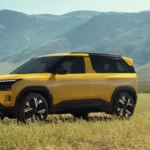
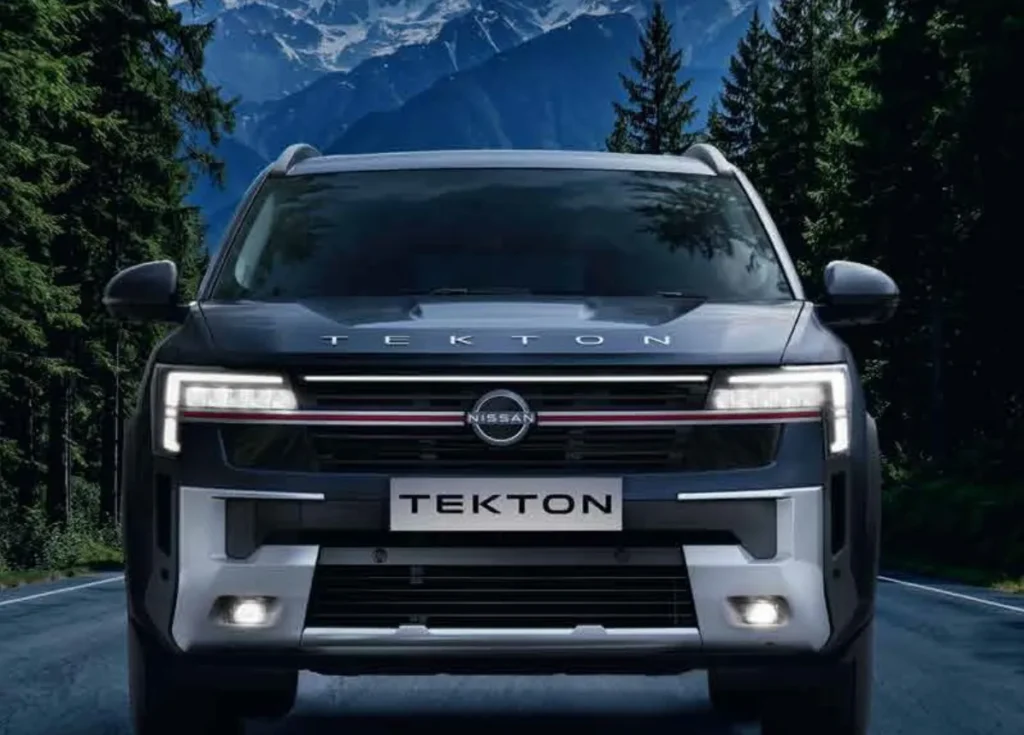
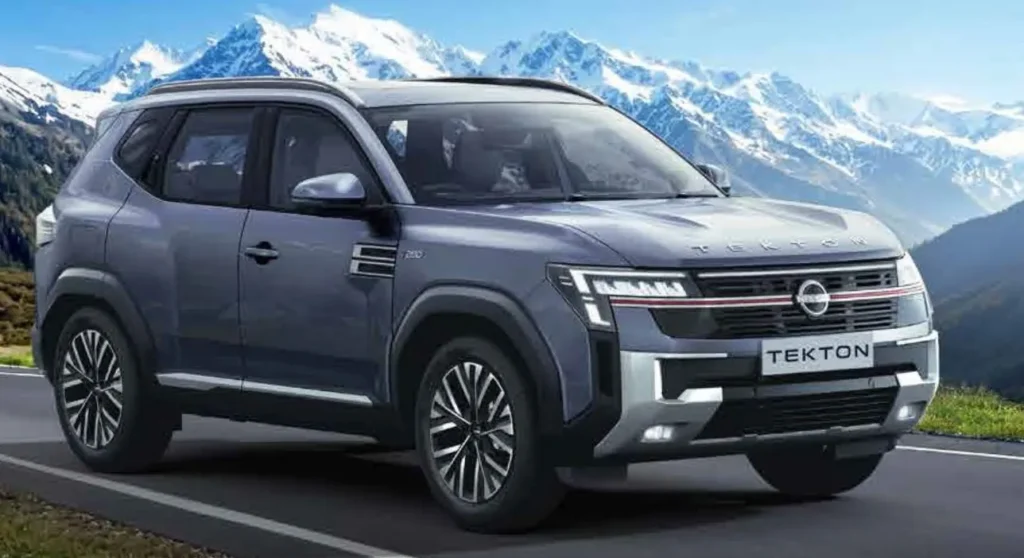
Its boxy proportion and Petron inspired design language gives it a more bigger and muscular appearance than its actual proportions. In the core Nissan Tekton is a badge-engineered new Duster. It is built at the same factory and shares its platform, powertrains and several key components with its French brother. However, Nissan gives it a distinct identity, inspired by the flagship Petrol SUV and it actually looks a like a baby Petrol.
Nissan managed to look very different to look despite sharing almost everything with the Duster. The wheelbase, the roof, the doors, fenders, wheel arches, and even the ground clearance are identical. Yet if you look at two cars next to each other the Nissan immediately appears larger, tougher and more substantial and this illusion comes from Nissan’s redesign. The front end is undoubtedly its biggest plus point. The front is noticeably more upright, with a larger bumper, a far more sharper grille and a stronger, squarer design carried throughout.
Where the Duster feels angled and sleek, the Nissan Tekton deliberately looks more rugged, like bigger American SUV. The grille, connected light bar and red accents on the gives it a bold and distinctive look. Make it very different from the rest of the crowd a very different boxy and tough look. It comes with functional bumper air scoops with fog lamps, a very rare feature in this segment. The sharp sculpted bonnet adds plenty of muscle, while the side profile is more attractive due to the 18-inch alloy wheels wrapped with chunky, high-profile tyres and all proportions fit very perfectly.
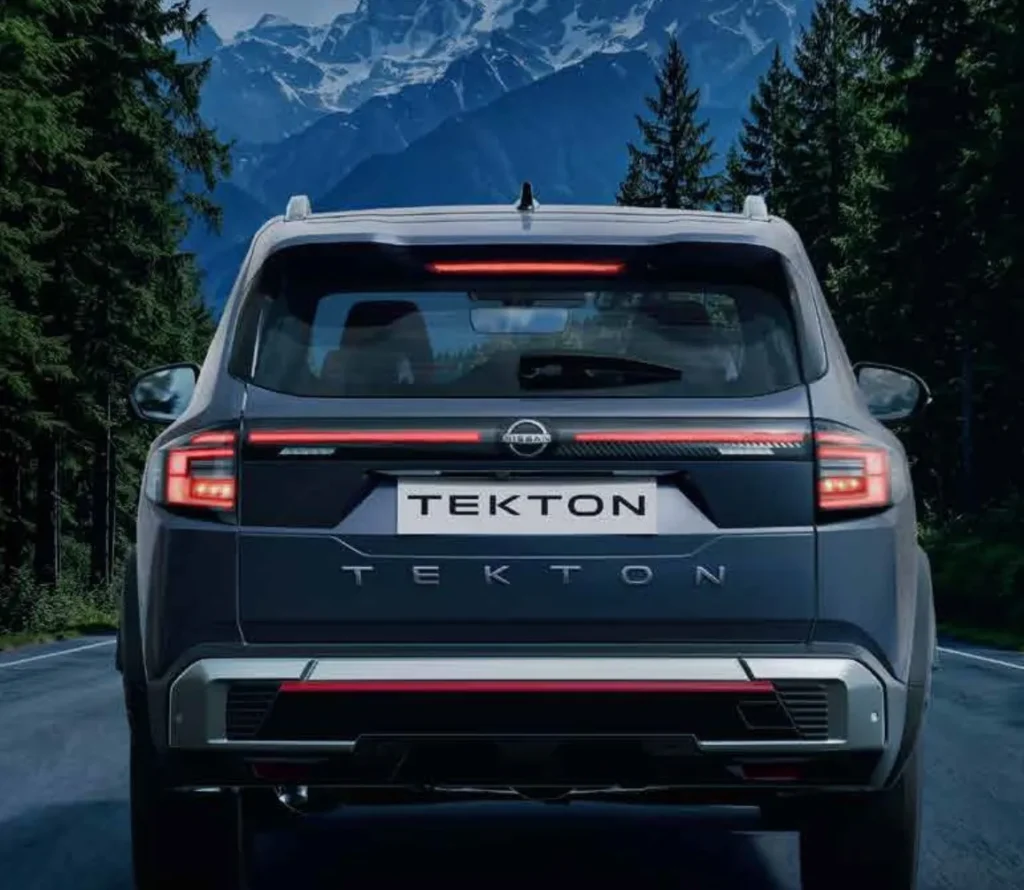
Complimenting each other and comes with one of the best-looking factory-fit alloy wheels in the segment. Ground clearance is very good an impressive 212mm, making the Tekton well suited for rough terrain and light offroading. There is a T280 badge on the front fender indicating the 280Nm of torque produced by the 1.3-litre turbo-petrol engine, while a unique symbol of Himalayas adds a touch of bold character. At the rear, the tail-lamp design is inspired by the petrol and it is executed very well. While it is not the largest SUV in segment, but it gives a good balance between road presence and ruggedness with an urban appeal.
Interior:
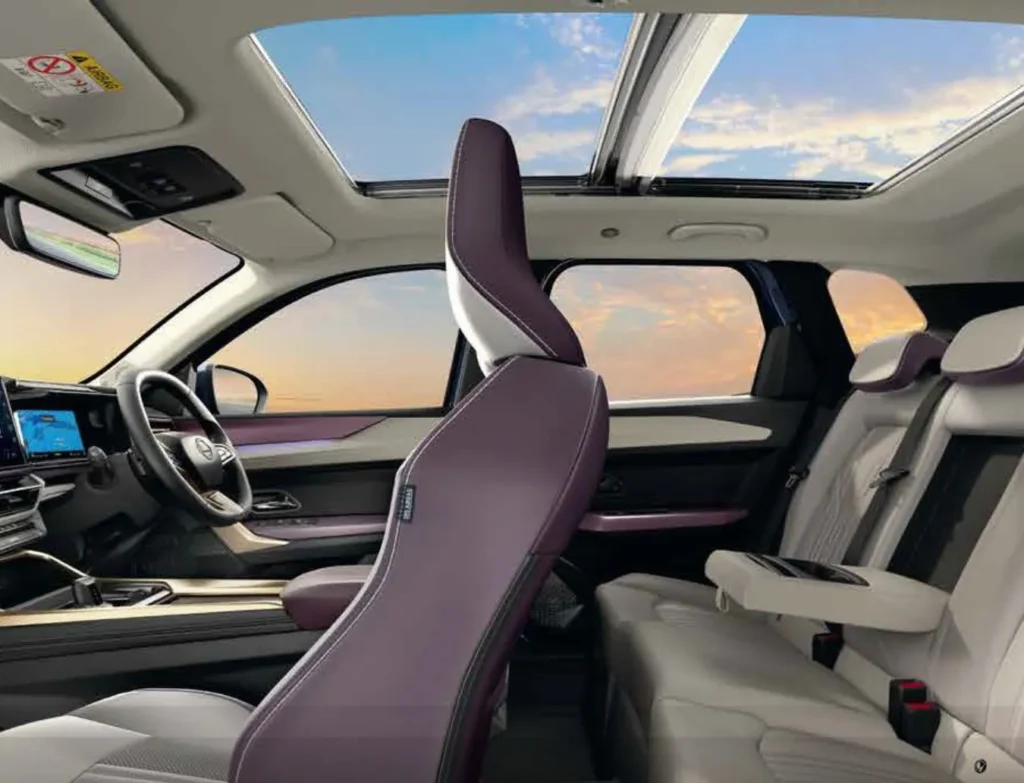
Inside the cabin your focus shifts immediately from rugged exterior to a premium and more technology oriented cabin. It completely changes itself from the rather conventional interiors which are associated with Nissan in India for a very long time. Instead of the old black-and-grey scheme, the cabin combines premium upholstery, white trim and rose-gold accents. Nissan has done a great job differentiating the cabin from the Duster’s.
The layout remains largely the same, but the layout is very different. Padded and leatherette trims on the dash and door pads look premium and, along with the burgundy, gold and light cream colour give airy and fresh ambience. There are also Nissan-specific touches on the dashboard, including some Japanese numerals represented by two vertical lines NI and three horizontal lines SAN.
Some buyers will absolutely love its individuality but some may find it slightly too light. Because a darker interior may have been the safer choice. Red and dark interiors have already proven successful in some cars, while premium brands have demonstrated for years just how effective lighter colour can be. Nissan Tekton’s exterior already carries subtle red accents. The white upholstery also a big concern for Indian conditions. Aside the Colour choices, though, the quality itself is very good. Material quality, switchgear and overall fit and finish are some of the best in the segment.
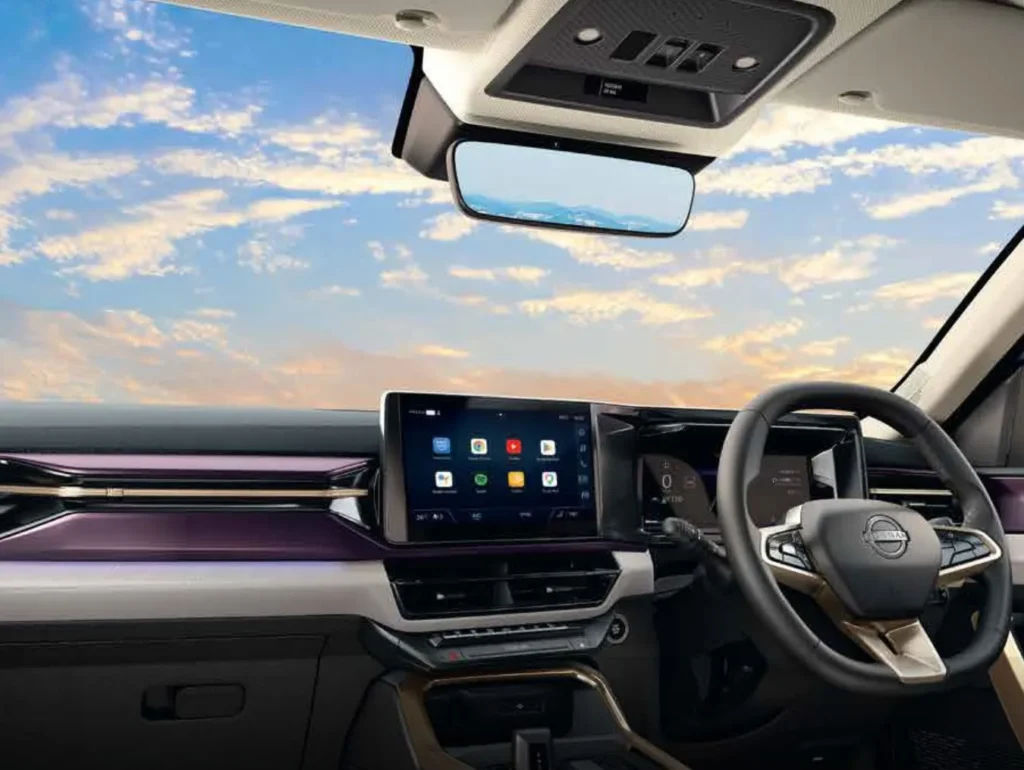
If you’ve already driven the new Duster, the driving position layout will feel immediately familiar. The infotainment system, digital instrument cluster and general ergonomics are largely identical. The driving position is good and visibility is clear, with the bonnet clearly in view from the driver’s position, and most of the controls are easily in reach to hand. Ergonomics are largely well, though taller drivers who prefer a high seating position may find the A-pillar slightly blocking the view but it’s very less. The driving position itself feels more cockpit-like as the dashboard, screens and the controls are all angled towards the driver for easy reach.
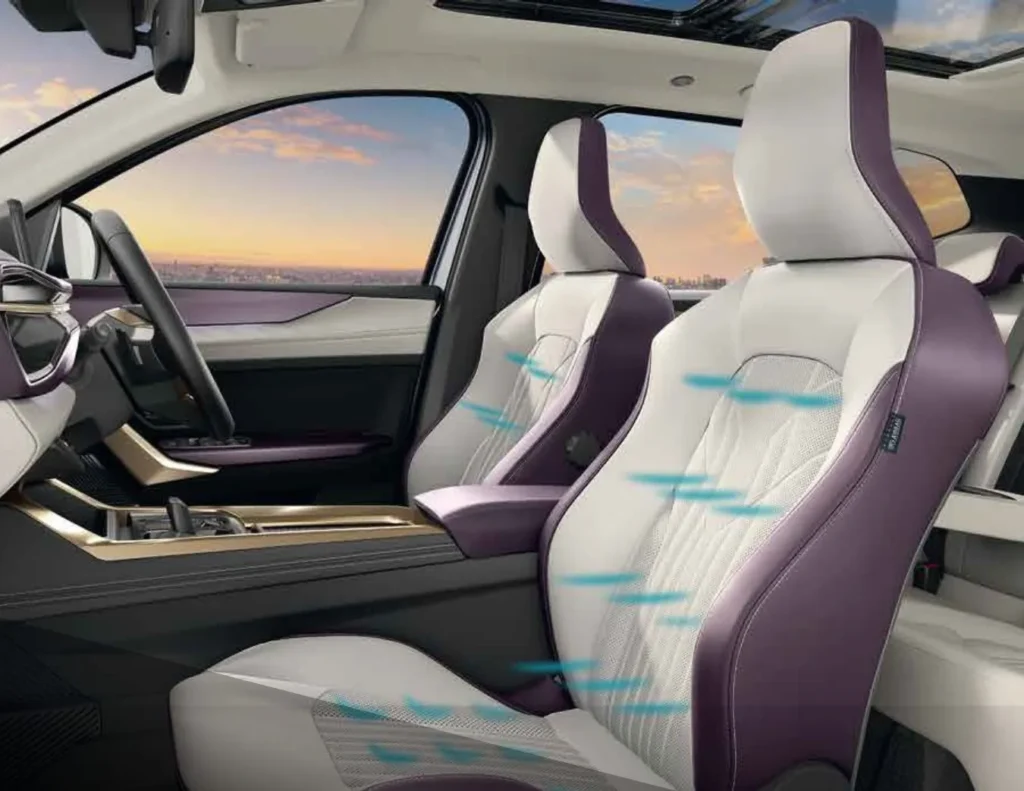
You also feel cocooned like into the cabin, making the Nissan Tekton’s driver’s position a very unique place to be. Tekton’s air-conditioning performance is good but needs some improvement. Even at the highest temperature setting, the cabin takes bit time to cool down. But the ventilated front seats are very good and help you cool down faster. The seats themselves are well built and provide excellent support and long-distance comfort.
The new 10.25 digital instrument cluster is clear and easy to read, offering multiple display layouts. Unlike the Duster’s tachometer display, the Nissan gives a more conventional and user-friendly setup. Physical controls for climate functions, audio settings and ADAS options are particularly tactile and much better than the fiddly touch panels nowadays. Depending on the variant, it includes a 10.1-inch HD touchscreen with wireless Android Auto and Apple CarPlay, panoramic sunroof, dual-zone climate control, ventilated front seat and a powered driver’s seat and for higher variants also comes with ADAS, a 3D Around View Monitor and Google built-in connectivity.
Cabin has plenty of storage options. The cooled wireless charging pad gives added convenience, while USB-C ports and a 12V socket are also provided. However, 1-litre bottles cannot be stored in the front door bins, although they do fit upright in the rear door bins. Storage spaces also includes deep cup holders and a large central armrest unit. The glove box area is generous, though part of it is compromised by the fuse box. While cabin space is decent, it’s not very big, especially when compared to the Sierra, and Seltos, but its closer to the Creta or new Kushaq.
Due to tall height accessing the rear seat requires a bit of effort due to the high step-in and bit narrow opening. The rear seats are well angled, under-thigh support is also good. The rear position is best for two adults rather than three. All passengers get individual headrests with three-point seperate seat belt. Rear-seat also includes seatback pockets, with rear AC vents, two USB charging ports, a center armrest, and a phone holder. The panoramic sunroof adds more light feel. It also comes with a boss mode for the electrically adjustable front passenger seat. The boot space is massive 518 liters, and also comes with an electrically operated tailgate, making it ideal for long-distance touring and there’s a full-size spare tyre too.
Key Features and Safety:
The Nissan Tekton is generously equipped with modern tech a panoramic sunroof, powered and ventilated front seats. A 10.25-inch instrument cluster and a 10.1-inch touchscreen which comes with wireless Android Auto and Apple CarPlay with built in native Google integration. Including Gemini voice assistant and Google Maps natively built-in and runs it in the digital cluster as well. It also has one-touch up/down power windows all around and a powered tailgate.
The Google Play store accessible with major streaming, gaming and music apps, is also downloadable. The interface is very intuitive to use with quick touch response, though the sound system is decent. The touchscreen also gets physical buttons for volume and screen mode control, while the steering-mounted switches are used for media control. It also includes Dual zone automatic climate control, 48 colour ambient lights, 6 speaker Arkamys audio system.
The safety pack is impressive. Comes with a comprehensive ADAS function, the Nissan Tekton also secured a 5-star Bharat NCAP rating. The vehicle uses a monocoque structure with 62% high strength and ultra high strength steel, including reinforcement in critical areas such as the A and B pillars. The lane-keep assist works mostly good but sometimes it tends to weave between the lane markings. The adaptive cruise control system is also good, maintaining safe distances while slowing progressively with traffic. The kit also includes 6 airbags, ABS with EBD, highline TPMS and a very calibrated ESP, 360-degree camera, and blind spot detection and auto emergency braking.
Performance: Nissan Tekton
First time Nissan offers 100% turbo charged lineup instead of NA engines mechanically. It remains same with the Duster. The Nissan Tekton comes with the same 1.0-litre and 1.3-litre turbo-petrol motors. It also means it also inherits Duster’s greatest strengths the power and torque. The 1.0-litre turbo-petrol unit is shared with the Magnite. But with some tuning, so it produce higher torque to 166Nm, up from 160Nm, but power remains the same at 100hp. It is paired with fimiler 6-speed manual gearbox but with some retwike.
To compensate for the Tekton’s weight and performance needs, Nissan has equipped this gearbox with shorter gearing than the 1.3-litre variants. It feels perfectly adequate when you drive the car in your city, but the small-capacity turbo engine has a noticeable turbo lag. In step inclines there is noticeable clutch slip, and enthusiastic driving need fast gear changes to keep the engine in its power curve. Peak boost arrives after 3,000rpm, below that the power delivery is flat-lines and above which, power tapers down rapidly. The gearbox itself lacks the slickness like some rivals. So this engine is best for city driving because of the power and how it’s delivered.
The 1.3-litre turbo-petrol is significantly more refined and powerful. Better refinement gives much better and strong performance. It makes 163 PS of power and an impressive 280Nm of torque highest in the segment. With larger 280 Nm of torque it offers significantly stronger acceleration, and its best suited for enthusiastic drive on highway. Turbo lag is very less compared to the 1.0-litre, but not totally eliminated.
On steep inclines and under stop-start conditions, the engine sometimes struggles to build revs quickly enough giving a weak bottom-end response. But after 2,500rpm, the turbo kicks in, and the engine became live. The engine also makes a unique and appealing turbo at higher revs, though some may find it fun. It comes with 2 options a manual or a 6-speed wet-clutch dual-clutch automatic transmission. In the DCT shifts are smooth and seamless, but responses are bit slower than expected.
The gearbox has a strange tendency to upshift and it makes the Nissan Tekton feel less responsive than it actually is, so you have to use paddleshifters for quick overtakes. But the shift action lacks tactility on the paddleshifter. The transmission system also not let you do too aggressive downshifts. So you have to press and hold the paddle-shifter to get into manual mode, where the transmission will let you get to and hold high revs and auto-upshift only once you’ve redlined for manual override.
Nissan Tekton comes with two drive modes – Comfort and Eco – but the absence of a Sport mode is very disapointing. But the manual mode allows greater control over the transmission make it fun to drive on open roads. In city traffic, however, the eco mode works well, with smooth low-speed power and a well-calibrated crawl function.
Ride and Handeling:
The real strength of Nissan Tekton is its chassis design. The ride quality is very good, with enough compliance to absorb any shock, potholes and sharp-edged of the road, without allowing the body to become excessively loose. On a long drive, that balance matters the most. Tekton remains comfortable over bad roads but does not feel stiff. So this time Nissan done a great job in balancing ride-and-handling together.
Unlike many cars, the Tekton does not feel overly firm at low speeds. Instead, it gives a supple, absorbent ride. The steering is well judged and responsive. It offers with a light and heavy modes. The lighter setting is perfectly usable at low speed and in city traffic. Though Tekton is not a light SUV, but it responds predictably and remains very composed through any bends.
The combination of suspension compliance and body control was very impressive. It does not require to slow down dramatically every time on bad roads, which makes it a genuinely capable long-distance vehicle rather than simply a comfortable SUV. The 212mm ground clearance also proved good confidence. Tekton remains front-wheel drive, so hardcore off-road is a bad idea, but the clearance and suspension travel give it useful soft road ability.
Body control is excellent with very little roll, and grip levels give confidence, steering responses are excellent, and the chassis always encourages you to drive little quicker without feeling nervous or overly sporty. Nevertheless, from a purely dynamic view, the Tekton remains one of the standout driver’s SUVs. Braking performance is equally impresive, with a progressive and good stopping power for a vehicle of this type.
Pricing:
At ₹10.49 lakh to ₹18.59 lakh ex-showroom price, the Nissan Tekton is more premium of Rs 10,000-50,000 more than a Renault Duster. The range has 12 variants: six of them powered by the 1.0-litre turbo-petrol, and two by the 1.3-litre manual and four by the 1.3-litre DCT. It enters one of India’s most competitive segments, with rivels like Creta, Seltos, Victoris, Taigun and its Duster.
Pros and Cons:
Pros :
Bold and Distinctive design gives a muscular and big road presence.
Powerful 1.3 turbo petrol engine producing impressive numbers.
5 star safety.
Strong feature list.
High ground clearance.
Excellent handling.
Premium interiors.
Excellent ride quality.
Enjoyable driving dynamics.
Class-leading boot space.
Cons :
Lack of Hybrid options.
1.0 engine lacks in power.
DCT is bit slow.
No 4wd options
Rear space is no very good.
Prominent turbo-lag with both engines.
No auto option for 1.0 turbo-petrol.
Verdict: Nissan Tekton
The Nissan Tekton is a very well-engineered SUV and it has a strong ruggedness to its nature. Not only that it is a great driver’s car, especially for bad roads or rough conditions with excellent driving dynamics. Which is very rare in this segment only few cars offer that kind of handling. It also has plenty for tech and safety with a spacious and practical cabin for family use. Its look good, loaded with well equipped and comfortable, with a premium-classy feelings and leading 518-litre boot. The rear seat may not be best spacious in the class, but it comfortably accommodates anyone, while ride-and-handling balance ranks best.
The biggest drawbacks are its powertrains though, it lack of punch and responsiveness, as well as fuel efficiency. The Tekton is exactly the car Nissan needed right now. It looks tougher, more distinctive and arguably more desirable than its Renault Duster, while retaining all the dynamic strengths that made the Duster one of the best driver’s SUVs. The bigger challenge now lies beyond the car itself. Rathne Nissan needs to invest in its brand identity, strengthen its dealer network and become more wider in the Indian market. Because the product is already convincing now it simply has to convince buyers to walk into the showroom.