
Last Updated on 16/10/2026 by Raj
Maruti Suzuki Baleno Facelift
Maruti’s popular premium hatchback gets an update in 2026. Maruti Suzuki Baleno gets a new face, new engine, new features and more safety. So find more about in our review.
Introduction and History
For many years the Baleno has represented Maruti’s idea of what a premium hatchback should be, stylish enough to stand apart, practical enough for family and everyday life, efficient enough to make long term ownership easy. The Maruti Suzuki Baleno is a big name in the top-10 list of most-sold cars in India, near 16,000 units per month. The journey began with the modern Maruti Suzuki Baleno becoming a major product of the NEXA lineup.
By 2022, the new-gen Baleno had already crossed one million sales establishing itself as one of most important models of Maruti. In 2025 the Baleno gets a major safety upgrade, including 6 airbags as standard. Also some additional safety features. In 2026 Maruti finally gives it a mild update with their familiar formula. The facelift gets a style updated at the front end. Some interior feature additions with more improvement, a new Z12E engine, and most importantly level 2 ADAS. It contniuted to offered with a 5-speed MT or an AMT, and there’s also the CNG variant.
Design: Maruti Suzuki Baleno
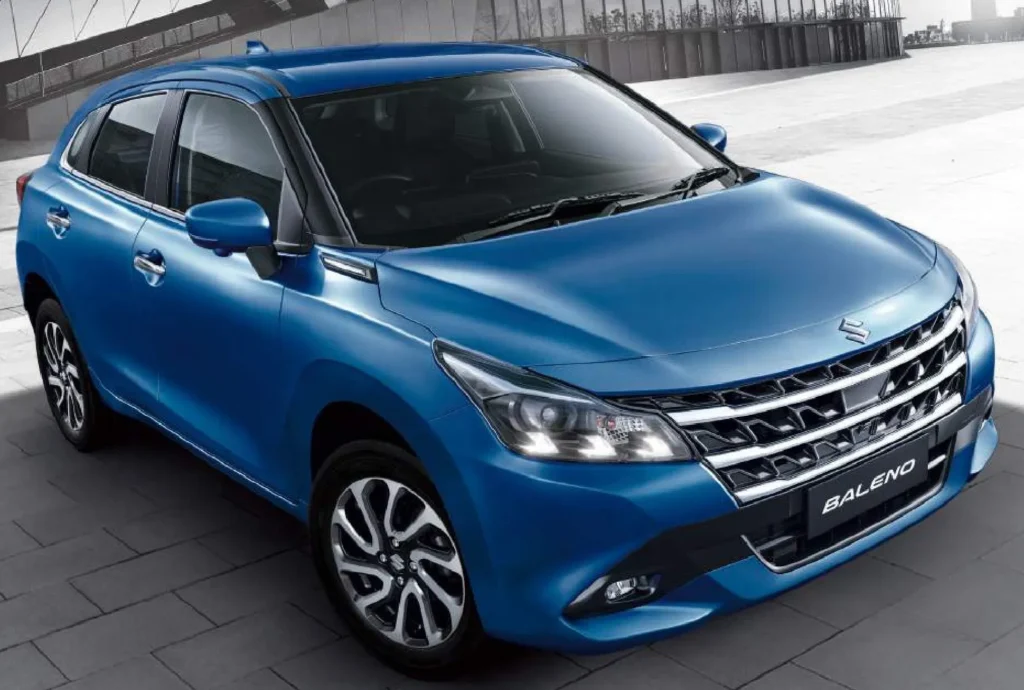
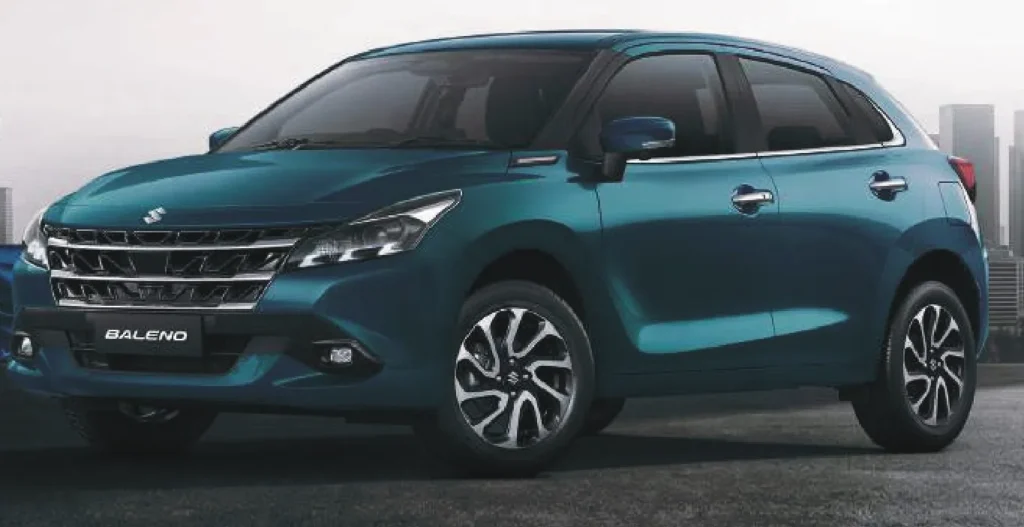
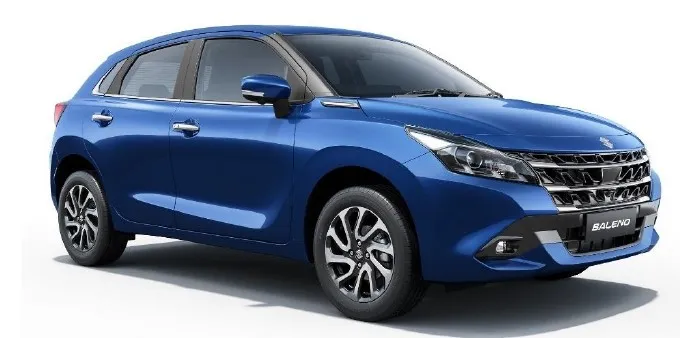
For a mid-life-cycle update, the Maruti Suzuki Baleno doesn’t get a complete design overhaul but some minor styling updates. The biggest change is the new face and front. The new grille is much larger than before with chrome slats, with three horizontal chrome slats and gloss-black detailing. The grille and the air dam look like a single unit with a radar module in the centre for the new ADAS. Maruti has tried its best by trying not to fix what isn’t broken and maintain the familiar.
The bumper is also revised, featuring a gloss-black trim that links and surrounds for the LED fog lights, looking much better and sportier now. Suzuki logo is now placed above the bonnet instead of grill. The clamshell bonnet with the two character lines are remains unchanged and the LED headlamps with the three-block DRL light are carried over from the previous gen car.
Changes on the sides are minimal, with the only change is the new chrome garnish on the front fender. The facelift measures the same as previous 3,990 mm in length, 1,745 mm in width, 1,530 mm in height, and wheelbase of 2,520 mm. So there are no structural changes and the build quality remains the same.
The Maruti Suzuki Baleno’s chrome lining under the windows that extends up to the C-pillar. Chrome door handles remain the same and not changed. The alloy wheel design is unchanged and carried over with 16-inch and 195/55 section tyres. The rear design also unchanged and the C-shaped LED tail-lamps design and bumper also remain the same. Overall, Maruti sticks to the old formula that made them successful, with minor changes to keep it fresh.
Interior:
There is minimal change on the inside as well as remains same layered. V-shaped dashboard only some new feature additions. The leather-wrapped, flat-bottomed steering wheel remains the same and nice to hold with same switch gear placement. Only right side of the steering wheel gets some additional buttons at the bottom to control the Lane Keep Assist. A button to engage adaptive cruise control and adjust the distance from other vehicle.
MID now features a new display for the ADAS. The same old fabric seats have been carried forward but this time they are ventilated and the outer edges are now finished in leatherette. However it’s a suction-type seat ventilation that cools by suction of the body heat, the ventilation works good however. On the driver’s right side, head-up display carried forward and the controls at the top.
The engine start/stop button on the left, and the headlamp leveler is on the right like the older models so not very much has changed. The buttons in the middle now give ADAS controls like emergency braking and lane departure warning etc. Also the traction control button along with the 360-degree view button and another button to switch off and start/stop next to it.
The cabin is made up of good-quality materials, like the soft-touch leather-wrapped steering along with padded elbow rests on the door cards. The cabin is practical too, with big door pockets, a big-sized glove box and many storage in the center console, also the big cup holders. The front seats are accommodating, supportive and give very good cushioning. The seats are height-adjustable, and with tilt/telescopic steering, finding an ideal driving position is very easy.
Space at the rear is always good in Maruti Suzuki Baleno, and even tall passengers can easily find good headroom or legroom. There’s good under-thigh support at the rear seats with good amount of cushioning. So the rear seats are comfy place to be. A new addition is an adjustable headrest and three-point seatbelt is also available. Rear space also gets AC vents and USB charging ports for passengers.
Boot and Strage: Maruti Suzuki Baleno
There is plenty of storage all around. At the front you have two cup holders that can hold a smaller water bottle, while the glove box is bigger and can accommodate much more than just papers. The front armrest can also have some space to hold keys, a wallet, and small items. All four door pockets can easily carries a 1-litre water bottle while offering additional storage for items.
Move into the second row, and there is good amount of legroom. The headroom and knee room are more than sufficient. But the shoulder room is a bit tight fit for three people, but otherwise, two adults can sit perfectly. The boot space, it’s a sizeable 318 litres, but the loading lip is quite high. The Baleno retains a spare tyre under its boot floor.
Features and safety:
The nine inch touchscreen infotainment with SmartPlay Pro+ is very easy to use and is the same as the outgoing car, with wireless Apple CarPlay and Android Auto but it lags sometimes. New Clarion 4-speaker and 2-tweeter audio system has good sound quality. The sound crack at high volumes is minimal and clear as well. 360 degree view system is a good feature and very helpful during tight parking.
The reversing camera now has adaptive guidelines, but the picture quality isn’t that sharp. Other than that, the feature list was wide, with wireless smartphone charging, auto climate control, a head-up display, a colour MID, auto headlamps, an auto-dimming interior rearview mirror, rear wiper/washer, a tyre-pressure monitoring system, and connected car tech.
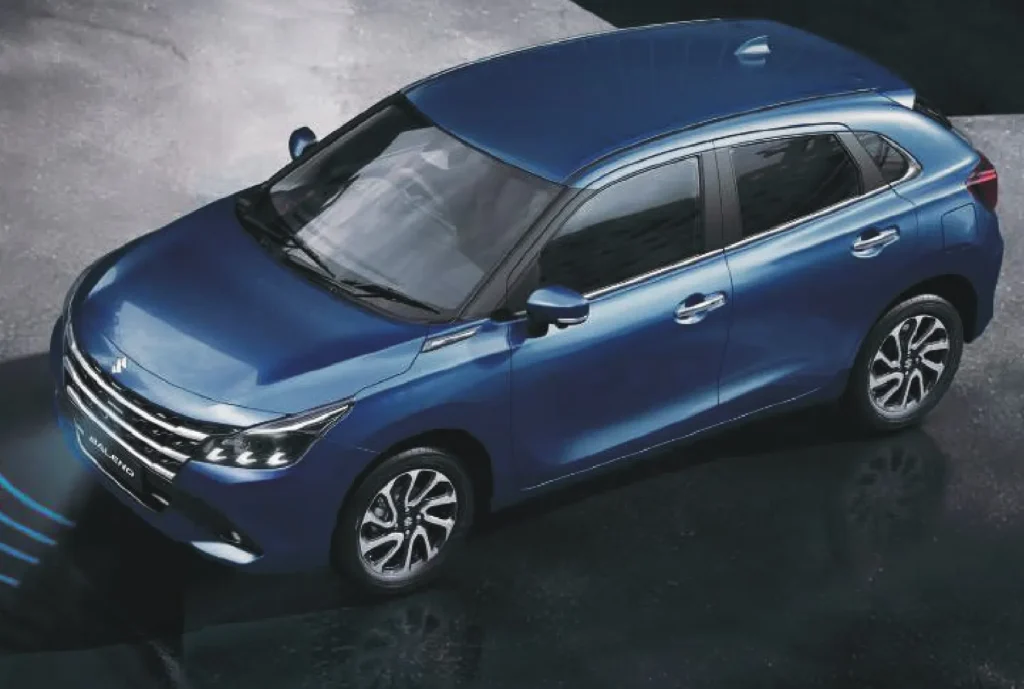
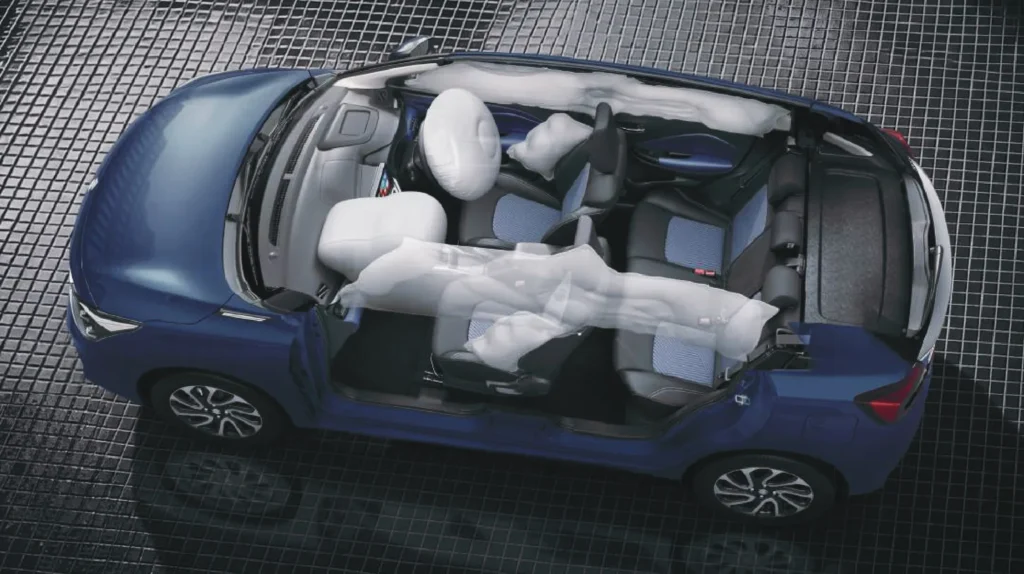
The new safety pack includes 6 airbags as standard, traction control, and Isofix child-seat mounts. The addition of Level 2 ADAS tech gives a greatly boosts the Maruti Suzuki Baleno’s safety quotient and also the segment first. The system is camera- and radar-based and gives features such as auto emergency braking, lane-keep assist, adaptive cruise control, lane-departure warning etc.
Power:
The biggest change with the new facelift is under the hood and it’s rare to see a new engine with a facelift by Maruti. The outgoing car was used the 1.2L, 4-cylinder K-Series petrol engine. Many assume that Maruti might put the 1.0-litre turbo-petrol engine from the Fronx but they did not. With this facelift, the K-Series engine is replaced with the 1.2L, 3-cylinder Z-Series petrol engine likes the Swift and the new Dzire. But the Maruti Suzuki Baleno is down a cylinder so it down on power output too.
The Z12E engine now makes 83hp and 112Nm of torque, which is 7hp and 1Nm lower than the K12N engine. These figures are bit lower than the K Series Maruti Suzuki Baleno 4-cylinder, which makes around 89 BHP & 113 Nm. So Maruti claimed the engine is new and makes less pollution, is more efficient and also some possibility of hybridisation in future. But with a curb weight of 950 kg, the power-to-weight ratio is bit compromise. So the Baleno Facelift isn’t as quick compared with the outgoing car.
But they claimed the new Z12E unit produced more improved low-end torque. The Z-series naturally aspirated engine is one of the most refined engines among 3 cylinders. It is equipped with an electric water pump for better engine cooling and more thermal eficiency. There is some amount of thrum which is normal in 3 cylinder engine and at idle but its smoothness out when revs increased. It’s also very quiet too at idle only audible when it touch top of the rev range.
The clutch is light and easy to handle; without any throttle input the car moves off the line smoothly. Throttle response is very good, and power and torque delivery is linear. Driving in low speeds, the car feels smooth with good driveability and it can pull from as low as 500 rpm without any struggle. Like the Swift and Dzire, this Z-series engine has an impressive low-end response and drivability. Power builds in a very linear manner and it holds very well.
However, its not very peppy as the older K-series engine and lacks in strong top of the rev range. With considering its power which is down a bit and the car is heavier than the outgoing car. So it’s not very quick in terms of outright acceleration. For daily runs and urban use its more than enough. Because the engine is not struggle in low revs, and the car can keep up with slow traffic without needing to shift down too often.
On the open road, the engine starts to the power after 1,500 rpm. It’s not very slow, and with proper use of the gear. Its became fun to drive and overtake quickly. The redline starts at 6,000 rpm. The manual gearbox is more impressive and effortless paired with the light clutch pedal. Feels good to drive and the gearbox is also smooth and has short throws.
Economy:
The biggest advantage of the 3 cylinder of Z-series engine is better fuel efficiency than the 4 cylinder. The 3-cylinder petrol with manual is now claimed an efficiency of 23.80kpl, and the AMT is give 24.77kpl. The Maruti Suzuki Baleno CNG also sees an improvement with a claimed a fuel efficiency of 33.61 km/kg. As always, these are only claimed so the expected real-world fuel efficiency is lower. Its also equipped with an idling start/stop function to improve fuel economy.
Ride Comfort and Handeling:
Baleno’s suspension setup remains the same as before a McPherson strut suspension setup at the front end and a torsion beam suspension. The Maruti Suzuki Baleno continues to give a comfort ride. The suspension is on the softer side, which gives excellent low speed ride comfort and the car glides over potholes easily. Only the potholes and big bumps fell in the cabin. It also manages to tackle any road imperfections with ease and stays planted at higher speeds. With well-controlled vertical and side-to-side movements and suspension does its function very silently.
It gets electric power steering, which is very light and user-friendly. The compact design of the car, with a light steering and a tight turning radius makes it very easy to drive in the city and tight roads. When speed increased, the steering weighed up with it. There’s no loose feeling or shaking at all during cruising on the highways. On twisty bends, the steering is quick and precise with a stronger return-to-centre.
Handling is not the strongest strength of this car but it displays good body control with very minimum body roll around the corners. On the highway, there is some bouncing at high speeds. Because a soft suspension setup, light weight, and the compact size of the car. But on long curves, the car holds very well and feels stable. The new Maruti Suzuki Baleno used the same braking system and equipped with disc brakes at the front and drum brakes at the rear. The braking performance is good, and the car comes to a halt with easy and under hard braking, the car doesn’t lose it position.
Pricing
The Maruti Suzuki Baleno facelift is priced starts form Rs 6.10 lakh (ex-showroom), a festive special offer. The top-end variant is priced at Rs. 9.59 lakh (ex-showroom) for the MT model and Rs. 10.09 lakh (ex-showroom) for the AMT model. Maruti continues to get a 3 year or 1,00,000 km standard warranty. This is a price bracket of its main rivals the Hyundai i20, the Tata Altroz, both of which are priced start from Rs 6 lakh.
Pros and Cons:
Pros:
Ride quality is good and spacious and comfy cabin.
Segment-first features like the Level 2 ADAS and ventilated seats.
Ease and cost effective ownership of Maruti.
Z-series engine’s drivability and low-end torque with added fuel economy.
Cons:
The styling remains the same just few twiks.
Infotainment system is bit lazy and need improvement.
AMT gearbox feels slow not smooth as compared to the CVT.
The engine is focused more on efficiency than performance.
Verdict: Maruti Suzuki Baleno
The Maruti Suzuki Baleno is always a good option, and Maruti has added very minimum changes on the outside. So its hard to differentiate it from the outgoing car only the engine is new. There are some weakness of course, like the slow AMT gearbox and its not as peppy as the older K-series engine. The glitches with the infotainment and noise of the engine, but these are not deal breakers.
It inherent strengths of a spacious cabin with comfortable ride quality, an effortless drive, a refined engine and a good handling balance with the best in class economy. Also the segment-first features like ADAS and the load of safety features combine with Maruti’s wide network of sales and service. So if you are planning to purchase a premium hatchback for your family you can take a look at the new Baleno.



Pingback: New Maruti Suzuki Brezza Review 2026 - anadiorb.com