Last Updated on 10/10/2026 by Raj
Tata Punch Facelift
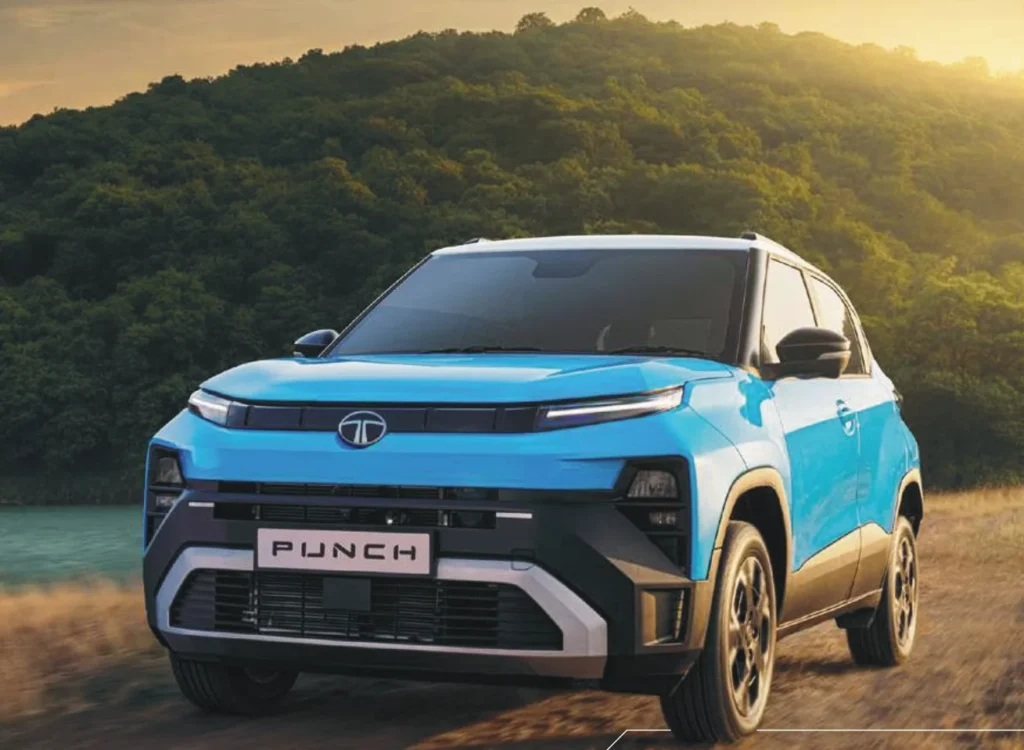
2026 Tata Punch facelift is hers and this small SUV got significant update, a complete exterior change, updated interior, new powertrain, and more. Let’s find out in this review.
Introduction:
The Punch do not need an introduction when it first launch the Punch in 2021. It was among the first few Micro SUV, a segment below of the cars like the Nexon, Brezza and Venue. It was a massive hit and Tata has sold over 7 lakh units of the Punch and it has become the country’s one of the highest-selling car.
Opening the doors for the customers who want an affordable SUV. Its compact dimensions, SUV-like stance, solid safety and pricing that made sense to first-time buyers and urban families. But now competition got tough, rivals got fresher design, and the Punch began to feel dated.
Now in 2026 Tata Motors brings the facelift, plugging the gaps, and improve it. The Punch’s key strength are its mini-SUV styling, tall ground clearance, good suspension setup, a nice cabin experience and safety credentials. If there was one weakness, it was its 1.2L NA three-cylinder engine, though it delivered good performance in the city, highway performance is bit dull and lot of people need more power.
The 2026 Punch facelift, this issue is solved by introducing its 118 PS 1.2L turbo-petrol engine, same unit of the Nexon. Not only that, Tata has also given a CNG + AMT combination to the Punch. There are lot of mechanical updates and design changes to the exterior and interior styling, as well as some additional features.
Design:
Tata has been making some good and bold looking cars for a while now, and the 2026 Tata Punch is no different. It based on the same ALFA platform, the front design has been heavily revised and the design language is heavily borrowed from the Punch EV with Tata SUVs’ familiar looks.
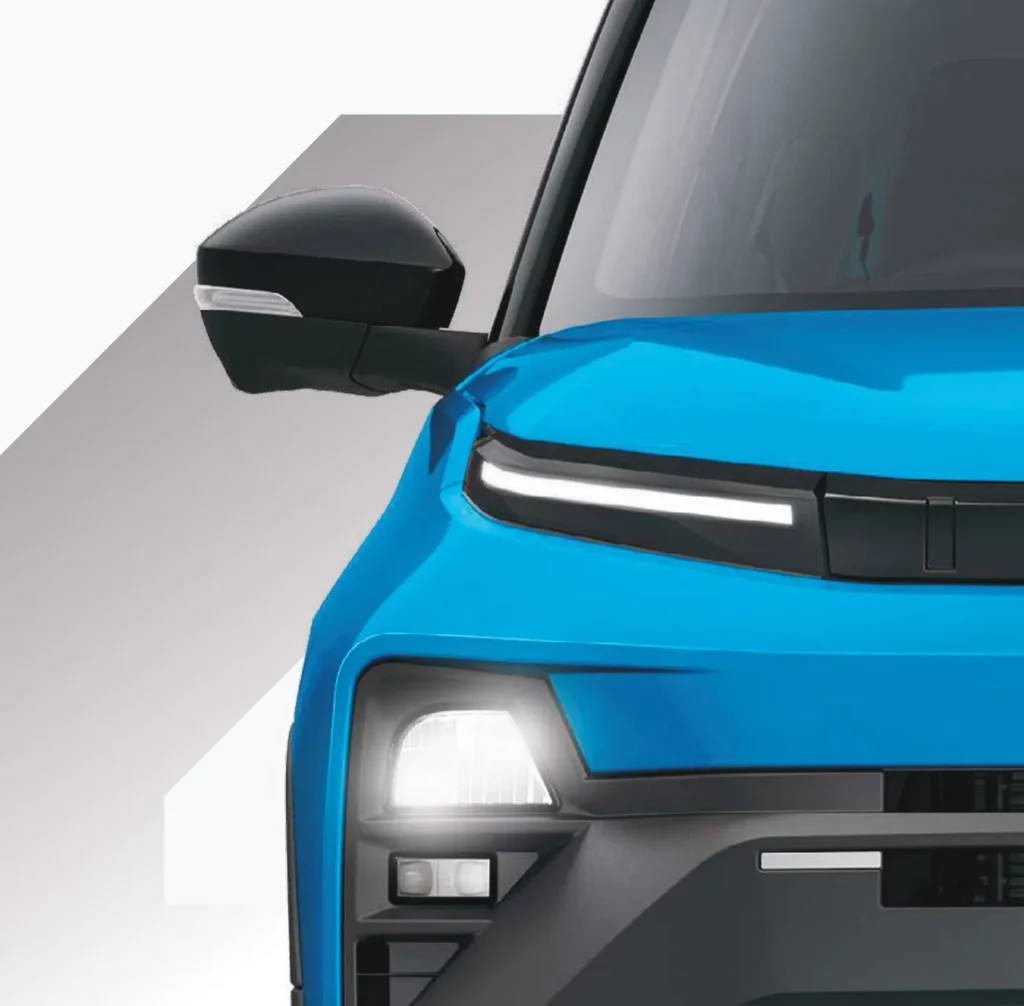
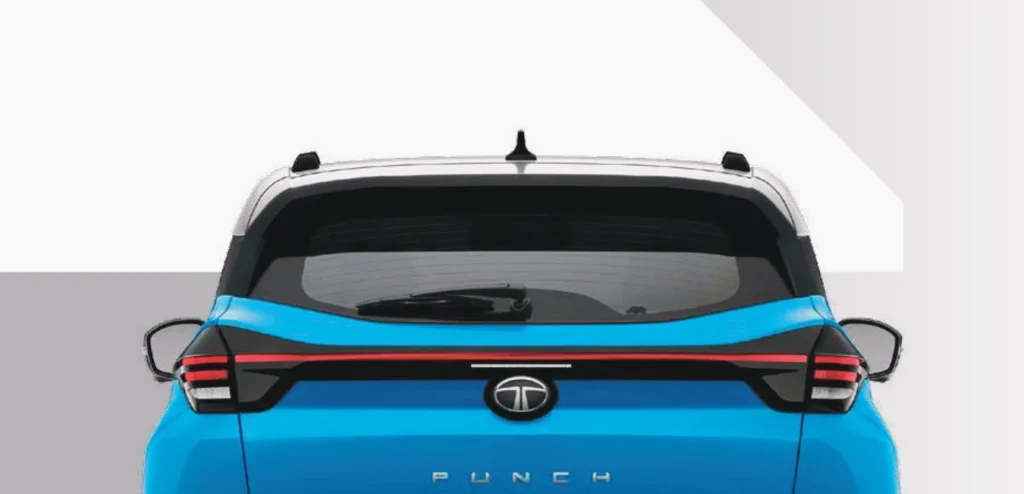
The Punch facelift gets a new styling for its bumper, radiator grille and DRLs, and the rear also received many changes. Now it gets connected LED tail lamps connecting the two ends. A redesigned bumper, along with the rear camera placement, which was earlier placed below the logo, now its repositioned.
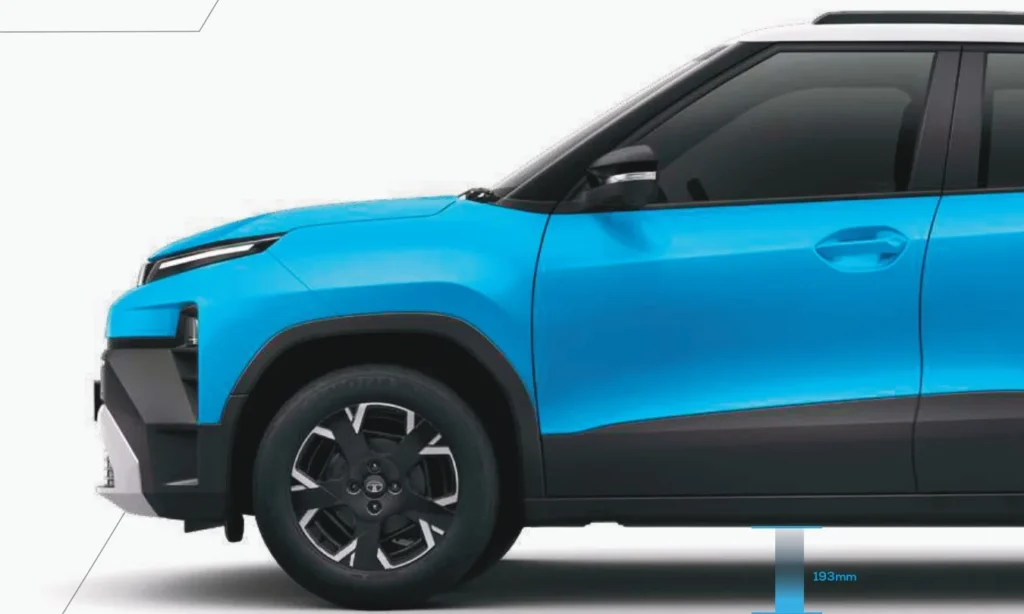
Side profile remains mostly same, but it gets the new 16-inch alloy wheel design and the ground clearance has slightly gone up now 193 mm. The squared-off wheel arches and large black cladding continue gives it a muscular and rugged look. The silver finish on the bumper gives it more off-road vibes.
The radiator grille is a two part unit and new. The upper part housing the front camera. New LED DRLs look sleek and not connected and its equipped with vertically stacked reflector LED headlights. LED fog lamps with cornering function.
It also features rain-sensing wipers, upper trims come with 16-inch wheels and 195/60 section tyres, and design of the 16-inch rims are diamond-cut alloys. The facelift now measures 3,876 mm in length, 1,945 mm in width 1,615 mm in height, largely the same as before.
Interior :
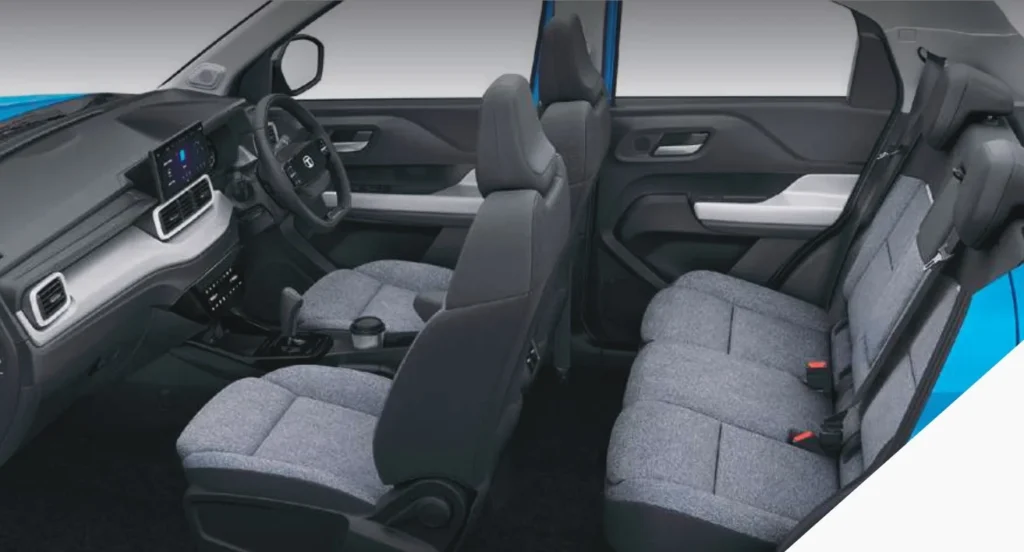
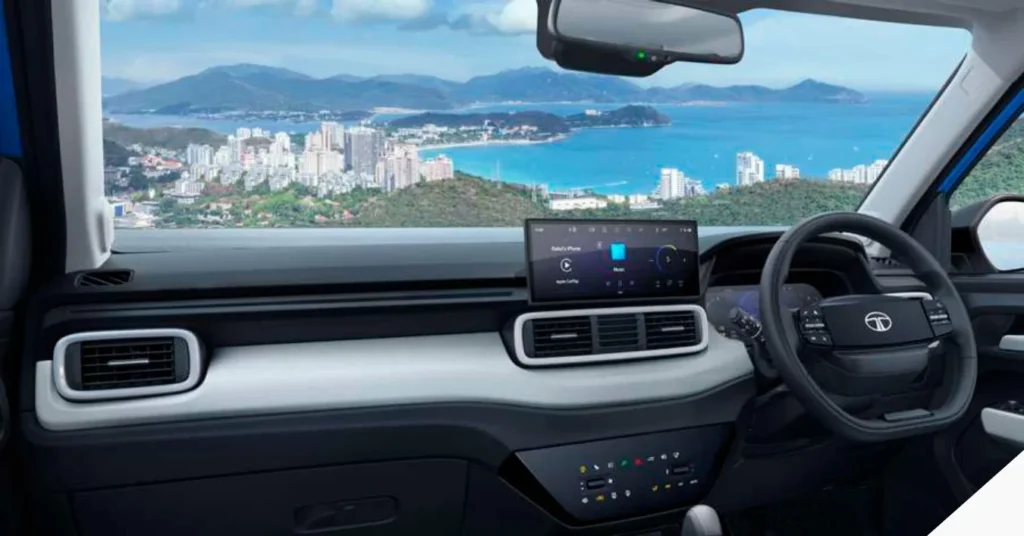
Inside of the car is closely similar to the outgoing Punch but there have been some noticeable changes. The first thing is the new two-spoke gloss black steering wheel, now features the illuminated Tata logo like other Tata cars. But it only gets tilt adjustment and has some blank switches.
The second change is the revised climate control unit. The physical controls are now replaced by a touch unit, with a similar layout to those the Sierra. Though it looks cleaner and more modern, it’s not very convenient to use on the move. Now it also gets a 7-inch customisable digital instrument cluster with very nice graphics, and in the CNG model. It even shows you the fuel usage for petrol and CNG in split manner.
The seats come with fabric upholstery, but their design is now changed, derived from the Tata Punch EV. The front seats are wide and well-cushioned and bit elevated gives you a nice view out of the cabin. The most useful update inside is the new extended thigh support for both the front and rear seats, gives more comfort for longer journeys.
Paddle shifters are available on the top-end models for take manual control if you need a quick downshift or upshift. There’s no cruise control and that’s why there are blank switches on the steering wheel. The central screen gives host of information, like time, direction, temperature, odometer and DTE. It also shows power and torque figures, along with fuel economy and comes equipped with passive TPMS as standard.
On the CNG variants you get a fire extinguisher, placed under the driver’s seat. This 10.25-inch touchscreen is same only with some minor tweaks, and it’s crisp, smooth to operate and comes with wireless Apple CarPlay and Android Auto. You can control various functions of the car with the touchscreen, including the air-con, 360-degree view system.
You got a wireless phone charger with a cooling pad and worked fine, and also get a 65-watt type-C fast charging port. It gets new auto-dimming IRVM, sunroof can be oprated using voice commands. However its compact size, rear space is enough for three adults, with more than enough knee room. But only the outside two passengers get an adjustable headrest, but all of them get three-point seat belts only. One problem is there are no load sensors.
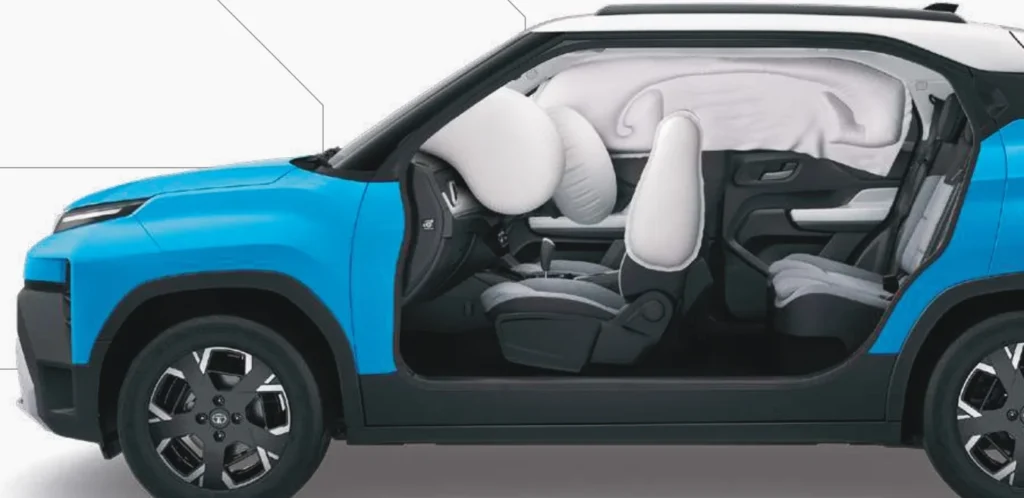
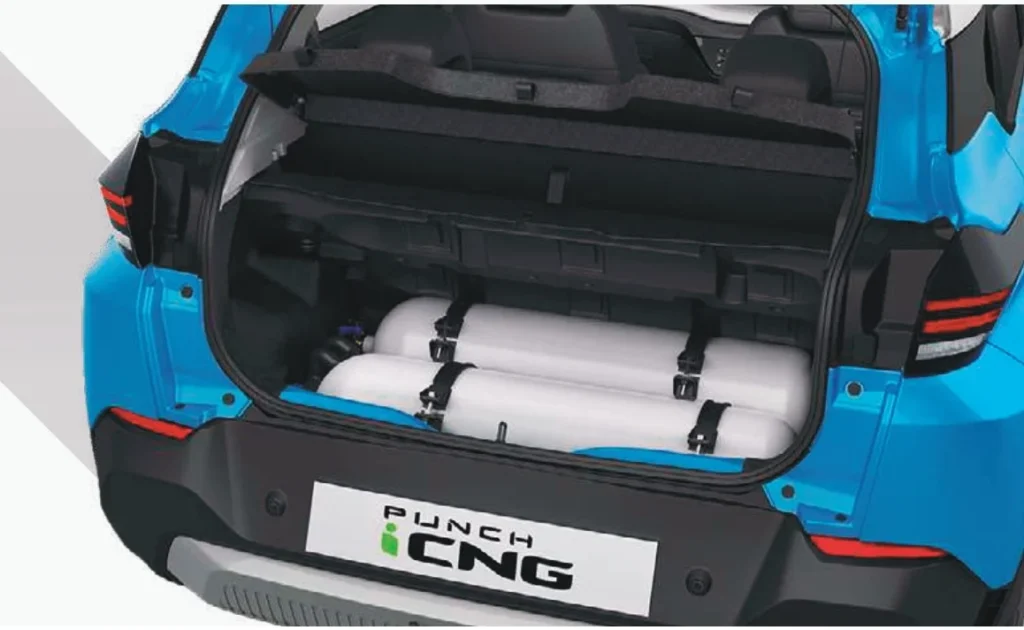
The rear seats now feature AC vents, a type-C charging port and a centre fold-down armrest with a bun. Boot space is 366 litres for the petrol variants and 210 litres for the CNGs. Six airbags Included in Safety system as standard, also and ESP, TPMS, ESC, ABS, hill hold and hill descent control, ISOFIX child seat, and auto headlamps. Tata Punch has also received a 5-star crash safety rating by the Bharat NCAP.
Powertrain :
Three engine options are available in new Tata Punch. 1.2-litre naturally aspirated petrol engine and turbo engine, and a 1.2-litre bi-fuel CNG. 88 HP and 115 Nm of torque produce by the naturally aspirated 1.2 petrol engine. The 1.2-litre turbocharged petrol motor it delivers 118 HP and 170 Nm of torque. The CNG mode on the iCNG models produce 73.4 HP and 103 Nm of torque.
Both non turbo petrol and CNG variants come with 5-speed manual or AMT options. The turbo-petrol unit only comes with a 6-speed manual. The CNG AMT, offers segment-first and has paddle shifters.
Performance:
The turbo-petrol, which is the same unit from the Nexon. It gives the essential performance boost that it very much needed. The 1.2-litre, 3-cylinder, MPFi unit makes 118 hp and 170 Nm of torque and comes with the 6-speed manual only. This engine is very refined though it is not as smooth as some other 3-cylinder turbo engines. But this engine is very eager to rev and it’s quick to respond to throttle inputs and touch the triple digit speeds easily.
Power delivery is linear, and peak torque comes early around 2,000 rpm. But unlike in the Nexon, there are no drive modes, though it can do a 0-100kph time in 11.1sec, and this is an 1100 kg car. So the power-to-weight ratio is good. Acceleration is fantastic, so you push hard.
The clutch is bit on the heavier side and action feels springy. Clutch travel is also long so some careful modulation is needed. The gearbox is fine, and shifts are fast but in an enthusiastic manner. It needs some effort to slot it into the gears. Still, the turbo-petrol unit is great for those wanting more performance, and the excellent chassis tune gives more spice.
The CNG unit uses the same 1.2-litre naturally aspirated engine and comes with a 5-speed AMT. This powertrain is already used in the Tiago and the Tigor. As expected, this engine is not built for performance so it touches the 0-100kph mark in 19.51 sec. While it’s enough for the city use, but overtaking on the highway is slow and needs constant downshift to via the steering-mounted paddle shifters or the Tiptronic system on the gear lever.
Throttle responses are decent, and it’ll easily keep up with the traffic or maintain a good speed on the highway. The gearbox is good by AMT standards, but with fast inputs, you will experience the delay during shifting, but drive it in a calm manner, its completely fine. The Tata Punch gets dual cylinders placed below the boot, which decreases luggage space. It gets some CNG-specific safety features – a fire extinguisher under the front passenger seat and the car won’t start if the fuel cap is open.
Comfort: Tata Punch
Not much has changed in the ride and handling department. Tata Punch facelift continues to use a McPherson strut system at the front and a twist beam with coil springs at the rear give it a robustness. The ride quality is very good and feels bit firm, the suspension does a great job of dealing with broken roads, bumps, and potholes, they bearly felt inside the cabin, and the suspension system is very silent.
With a compact size, 190 mm of ground clearance, 16-inch wheels, it glides through broken and difficult roads effortlessly. With increasing speeds, the suspension setup starts to shine. So you can tackle the bad roads and bumps without needing to slow down the car. At higher speeds, the car remains grounded and stable, inspiring confidence on highways. For the CNG models, it uses more firmer setup of dampers. But the ride quality remains good on regular roads.
Handling :
The new Tata Punch comes with two spoke steering wheel. At slower speeds, the electric power steering remains light and very easy-going, effortless to drive in city. It weighs up nicely at highway speeds, gives confidence when driving at faster speeds and remains consistent. The steering further complements the dynamic suspension and chassis.
With the more powerful turbo-petrol motor it continues to impress dynamically and it surprisingly agile and responsive on the twisty. There’s lots of control around the corners and there’s not much body roll either, with good straight-line stability at high speeds.
It comes with disc at front and drum at rear, but the braking performance is very progressive and more than enough. Under hard braking from higher speeds, the car comes to a stop in a straight line and remains well controlled.
Pros and Cons:
Pros :
Well handling and balance.
Punchy turbo-petrol engine and efficient CNG option.
Fuel efficiency, and super ride quality.
The facelift builds look more sleeker and sharper lines, while retaining the tough SUV look.
New design feels fresh and modern.
Feel more spacious than compact this characteristic has carried on in the facelift as well.
Very comfortable seats with good headroom and legroom and a decent amount of luggage space.
The Punch is fully loaded option for the segment.
Safety remains a strong point and comes with loads of safety features
Cons :
NA petrol engine feels slow.
Lack of fit and finish.
Cabin layout is unchanged, which could feel dated.
The touch-based climate control panel and lack of buttons.
No automatic gearbox is offered with the turbo-petrol.
Verdict and Price:
Tata has done a great work by addressing some minor issues and fill the performance gaps, improve the overall comfort. Revise the cabin and expand the powertrain options. Now you have the naturally aspirated engine, a CNG, CNG+AMT, and a turbo petrol.
So widen its appeal for more customers across the range. The 2026 Tata Punch looks new and Tata genuinely fill the gaps in the line-up. It starts at Rs 5.59 lakh (ex-showroom), and comes in six trim, and goes up to Rs 10.54 lakh (ex-showroom) for the CNG-AMT variant. It directly competes with the Swift, Baleno, Fronx, Exter, Kiger, and Magnite and the others car in these price segment.
But it is better equipped than them and assured safety with a 5-star Bharat NCAP safety rating. The NA petrol engine is the weak point, the cabin has a clunky feel, and fit and finish quality is inconsistent. But these things are replaced by the well sorted ride and handling.
Its user-friendly nature and solid build quality–and the new turbo-petrol which brings much-needed fun to the lineup, with the new CNG-AMT. If you’re in the market for a small SUV in the range of Rs. 6-12 lakh, it should definitely make it into your consideration.